
Kenya

Tsavo West National Park

When to visit
January to February and June to October
Size
9,065 sq km
Temperature
29 'C
Rainfall
15mm
Age requirement
12 Year

Overview

About Tsavo West National Park

Tsavo West covers 9,065 square kilometres of volcanic hills, lava flows and acacia woodland, and is markedly more scenic and more varied than its eastern neighbour.

Its centrepiece is Mzima Springs, where some 250 million litres of crystal-clear water surface daily after filtering for decades through the porous lava of the Chyulu Hills. An underwater viewing chamber lets you watch hippo and barbel from below the surface.

The Shetani lava flow, black and barely vegetated, spreads across several square kilometres and is recent enough to appear in Maasai oral history, its name meaning devil in Swahili.

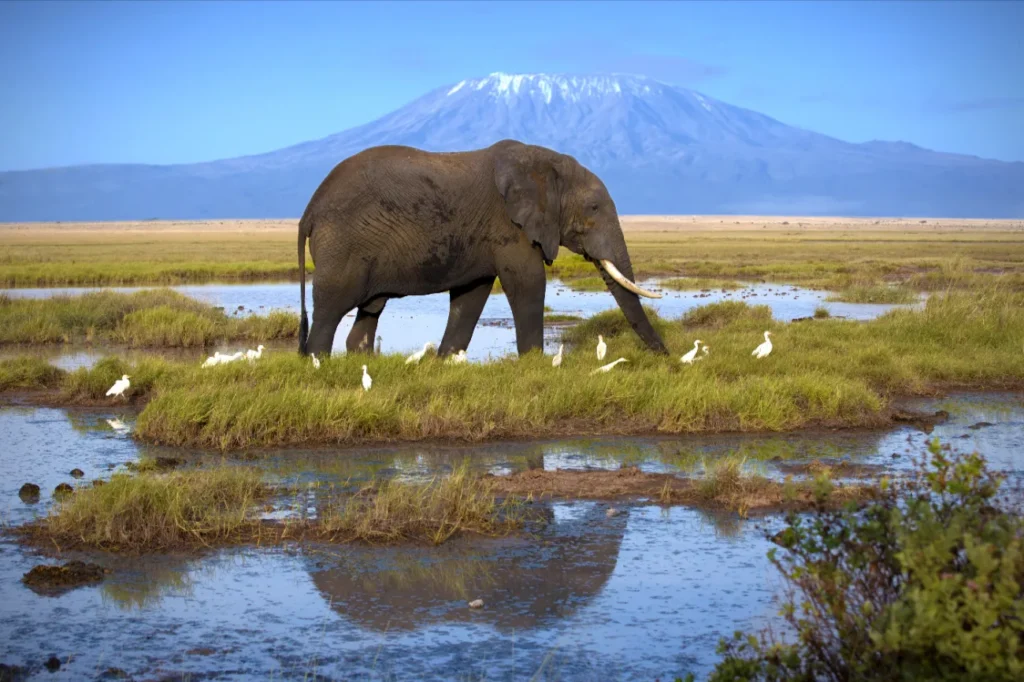
Tsavo West is greener and hillier than Tsavo East, with better cover and correspondingly harder game viewing, but the landscape itself does much of the work. On clear days Kilimanjaro rises across the border to the south-west.
People and culture

People and culture

The Maasai graze the plains to the west of the park toward the Chyulu Hills, and the Taita farm the hills to the east, giving the area two quite distinct cultural traditions along a single boundary.

The Shetani lava flow features in Maasai and Kamba oral tradition, its eruption recent enough to be remembered, and the name reflects the fear it caused when it emerged from the ground.

The Ngulia Rhino Sanctuary, fenced within the park, protects one of Kenya's important black rhino populations and is part of a national breeding programme that has been running since the 1980s.

Community conservancies on the western boundary, particularly around the Chyulu Hills, lease Maasai land for wildlife and have become an important source of income in an area with limited farming potential.

Getting there

How to get there

Weather

Weather and climate in Tsavo West National Park

Tsavo West is hot but less extreme than Tsavo East, sitting at around 200 to 1,800 metres with the higher ground noticeably cooler. Days run between 25°C and 30°C and nights fall to 14°C to 18°C.

Month by month

High and low temperature and rainfall, shaded by how good the month is for a safari.

  • Jan

    30° / 15°

    50 mm

  • Feb

    31° / 15°

    45 mm

  • Mar

    31° / 17°

    90 mm

  • Apr

    29° / 18°

    180 mm

  • May

    28° / 17°

    90 mm

  • Jun

    27° / 15°

    20 mm

  • Jul

    26° / 14°

    10 mm

  • Aug

    27° / 14°

    10 mm

  • Sep

    29° / 15°

    15 mm

  • Oct

    30° / 17°

    40 mm

  • Nov

    29° / 17°

    150 mm

  • Dec

    29° / 16°

    90 mm

  • Excellent
  • Very good
  • Good
  • Fair
  • Avoid

Rain falls in two seasons, the long rains from March to May peaking in April, and short rains through November. Annual rainfall is around 500 millimetres, higher than Tsavo East, which is why the vegetation is thicker and greener.

Mzima Springs are the exception to all of it. Fed by rain falling on the Chyulu Hills decades earlier and filtered through porous lava, they flow at a constant rate regardless of season, which is why they are so reliable for wildlife.

The volcanic terrain means tracks are rockier than in Tsavo East and slower to drive. Allow more time than distances suggest, and expect the higher ground to be cooler and cloudier than the plains.

Tracks here are rockier and slower than in Tsavo East, and the higher ground around Ngulia is noticeably cooler and cloudier than the plains below, so allow more time than the distances suggest.

Best time to go

Best time to visit Tsavo West National Park

Best months
Jan–Mar, Jun–Dec

Tsavo West is a dry-season park, though its varied terrain and permanent springs make it less starkly seasonal than the east.

June to October is the main dry window and the strongest for game viewing, when vegetation thins and animals concentrate at Mzima Springs and the waterholes. Views toward Kilimanjaro are also most reliable in these months.

January and February form a second dry window, hot and clear, with good game viewing and fewer vehicles than mid-year.

March to May brings the long rains, when the thicker vegetation of Tsavo West makes game viewing genuinely difficult. The landscape is at its most dramatic and the birding excellent, so this window suits photographers and birders.

November brings short rains and a brief green flush, with lower rates. Mzima Springs are worth visiting in any season, as they flow year-round.

Mzima Springs are worth visiting in any season, as they flow at a constant rate regardless of rainfall, which makes them the one reliable fixture in a park where everything else depends on how recently it rained.

Things to do

Things to do in Tsavo West National Park

  1. Mzima Springs

    Mzima

    250 million litres a day, with an underwater hippo viewing chamber.

  2. Shetani Lava Flow

    Chyulu Boundary

    A recent black lava field remembered in Maasai oral tradition.

  3. Ngulia Rhino Sanctuary

    Ngulia

    A fenced sanctuary protecting one of Kenya's black rhino populations.

  4. Chaimu Crater

    Near Kilaguni

    A young volcanic cone that can be climbed on foot for the view.

  5. Kilimanjaro Views

    Western Plains

    The mountain rising across the Tanzanian border on clear days.

  6. Roaring Rocks

    Near Ngulia

    A viewpoint over the plains, named for the wind through the gorge.

FAQ

Frequently asked questions

What are Mzima Springs?

They are a series of pools in the north of Tsavo West where around 250 million litres of water surface daily, having fallen as rain on the Chyulu Hills decades earlier and filtered slowly through porous volcanic rock. The water is exceptionally clear. An underwater viewing chamber allows you to watch hippo and shoals of barbel from below the surface, which is unusual anywhere in Africa. The Chyulu gate connects directly to Amboseli, so the two parks pair naturally on a southern Kenya circuit.

How does Tsavo West differ from Tsavo East?

Tsavo West is smaller at 9,065 square kilometres, hillier, greener and considerably more scenic, with volcanic cones, lava flows and views toward Kilimanjaro. Tsavo East is flatter, drier, larger and better for open-country game viewing and the famous red elephants. West has thicker vegetation, which makes sightings harder work but the landscape more rewarding. Many itineraries visit both, as they adjoin. Tracks here are rockier and slower than in Tsavo East, so allow considerably more time than the distances suggest.

Can I see rhino at Tsavo West?

Yes, at the Ngulia Rhino Sanctuary, a fenced area within the park protecting one of Kenya's important black rhino populations as part of a national breeding programme running since the 1980s. Sightings are not guaranteed, as the sanctuary is large and well vegetated, but the odds are considerably better than anywhere else in the Tsavo ecosystem. Entry is arranged at the gate. Kilaguni and Finch Hattons airstrips are served by light aircraft from Wilson Airport for anyone short on time.

What is the Shetani lava flow?

It is a field of black volcanic rock spreading across several square kilometres near the western boundary, formed by an eruption recent enough to survive in Maasai and Kamba oral tradition. Shetani means devil in Swahili, reflecting the fear the eruption caused. Caves within the flow can be explored with care, and the stark black landscape against the surrounding bush is genuinely striking. The Chyulu gate connects directly to Amboseli, so the two parks pair naturally on a southern Kenya circuit.

Is Tsavo West good for game viewing?

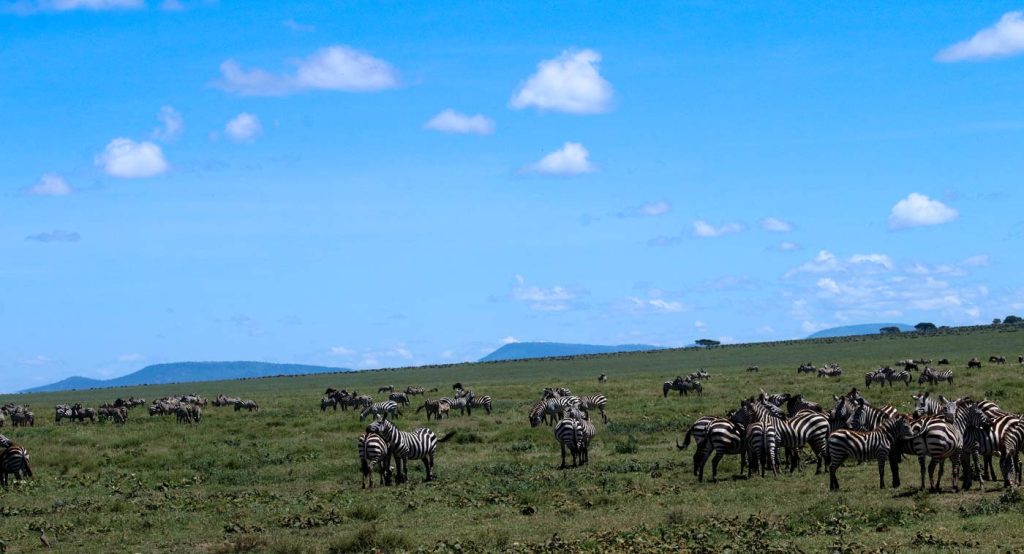
It is more challenging than open savanna parks because the vegetation is thicker and the terrain broken, so sightings take patience. Elephant, buffalo, giraffe and zebra are common, and lion are present though less readily seen than in the Mara. What Tsavo West offers is landscape, Mzima Springs and a sense of wilderness rather than the density of sightings found further north. Tracks here are rockier and slower than in Tsavo East, so allow considerably more time than the distances suggest.

How do I get to Tsavo West?

The Mtito Andei gate sits on the main Nairobi to Mombasa road, about 240 kilometres from Nairobi and three to four hours by car. The Chyulu gate connects to Amboseli, making the two easy to combine. Light aircraft serve Kilaguni and Finch Hattons airstrips from Nairobi's Wilson Airport. The park also adjoins Tsavo East, so both can be visited on one trip. Kilaguni and Finch Hattons airstrips are served by light aircraft from Wilson Airport for anyone short on time.

When should I visit Tsavo West?

June to October is the main dry window and the strongest for game viewing, when vegetation thins and animals concentrate at Mzima Springs and the waterholes, and Kilimanjaro views are most reliable. January and February form a second dry window. March to May brings the long rains, when the thick vegetation makes game viewing genuinely difficult, though birding and photography are excellent. The Chyulu gate connects directly to Amboseli, so the two parks pair naturally on a southern Kenya circuit.

Can I combine Tsavo West with Amboseli?

Yes, and it is a natural pairing. The Chyulu gate connects the two parks directly, and the drive takes around two to three hours depending on conditions. Amboseli offers open plains, huge elephant herds and the Kilimanjaro backdrop; Tsavo West offers volcanic landscape, Mzima Springs and thicker bush. Together they make a varied southern Kenya circuit that avoids the crowds of the Maasai Mara. Tracks here are rockier and slower than in Tsavo East, so allow considerably more time than the distances suggest.

Explore other destinations

All destinations