Lake Manyara National Park occupies a narrow strip between the wall of the Great Rift Valley and the shallow alkaline lake that gives it its name, packing an unusual range of habitats into just 648 square kilometres.
Roughly two thirds of that area is water when the lake is full, leaving a band of land rarely more than a few kilometres wide between the escarpment and the shore. Into that band the park compresses groundwater forest, acacia woodland, open floodplain, hot springs and marsh, which is why the game viewing changes so completely over the course of a single short drive.
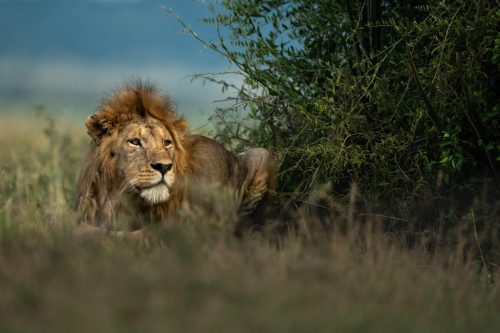
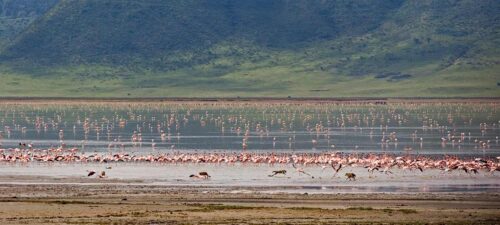
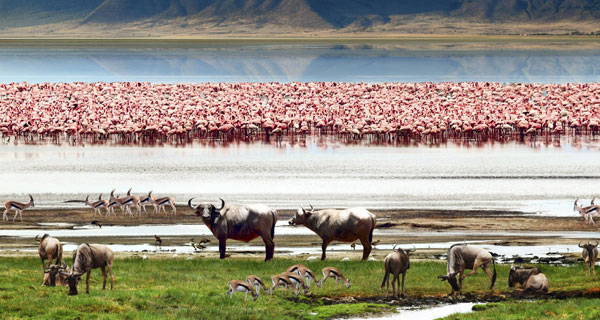
The park is best known for three things: the lions that rest in the branches of acacias through the heat of the day, the flamingos that gather in their thousands in the lake shallows, and the dense groundwater forest at the entrance gate, fed by springs running off the escarpment. It also holds one of the largest olive baboon populations anywhere in Africa.
Its position about two hours from Arusha, directly on the road toward Ngorongoro and the Serengeti, means most northern circuit itineraries open or close here. A single well-planned day covers the main circuits comfortably, which is why the park is so often paired with a longer stay elsewhere.