Amboseli National Park covers 392 square kilometres of dry lake bed, swamp and open plain in southern Kenya, directly beneath the north face of Kilimanjaro.
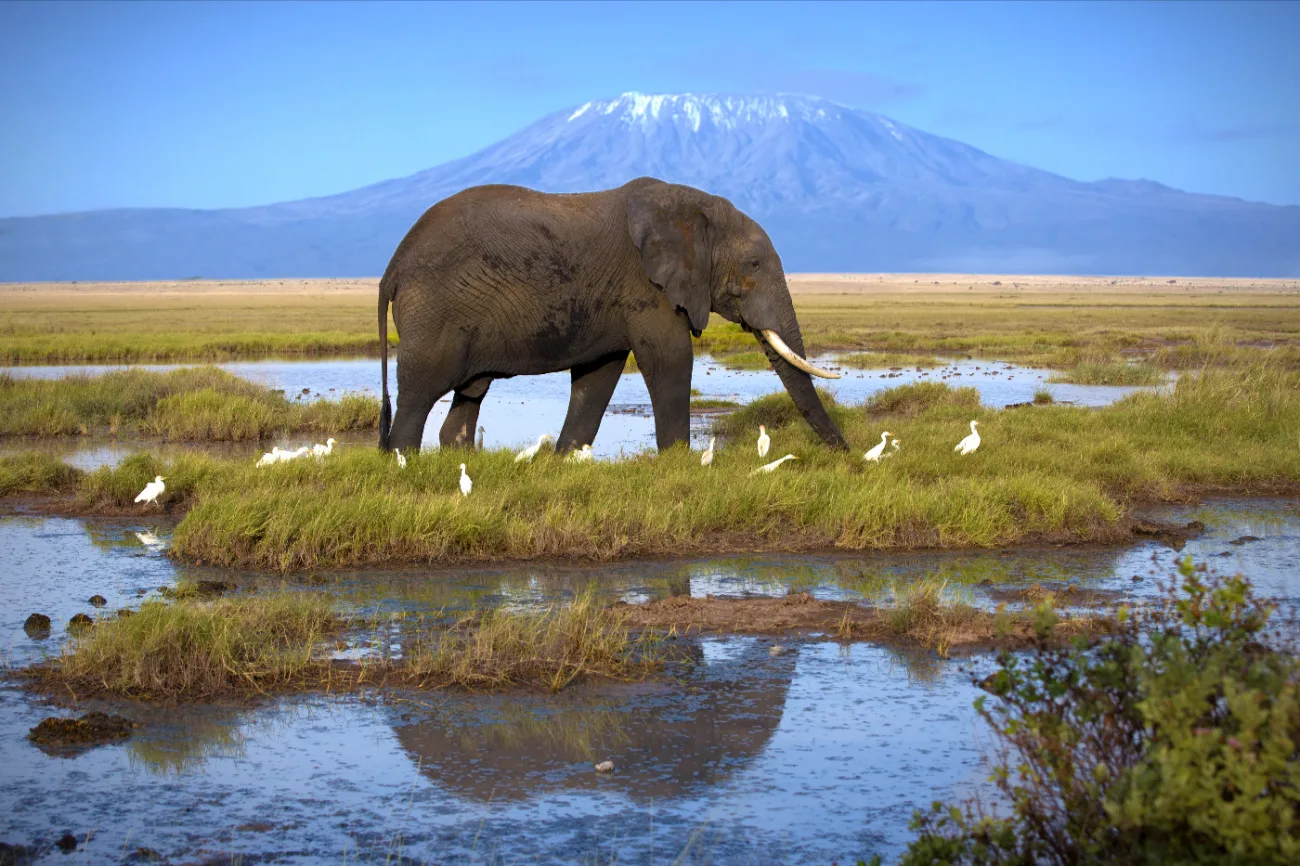
The mountain is the reason most people come. On a clear morning it fills the entire southern horizon, and the image of elephant crossing open plain with snow-capped Kilimanjaro behind them is among the most reproduced in African wildlife photography.
Amboseli is celebrated above all for its elephants, one of the most studied populations anywhere, monitored continuously since 1972 by researchers who know individual animals by name across several generations. The park holds some of the largest surviving tuskers in Africa.
Permanent swamps fed by snowmelt from Kilimanjaro keep the park green through the dry season, drawing elephant, buffalo, hippo and enormous concentrations of waterbirds onto a landscape that would otherwise be desert.