
Kenya

Ol Pejeta Wildlife Sanctuary

When to visit
January to February and June to October
Size
360 sq km
Temperature
25 'C
Rainfall
20mm

Overview

About Ol Pejeta Wildlife Sanctuary

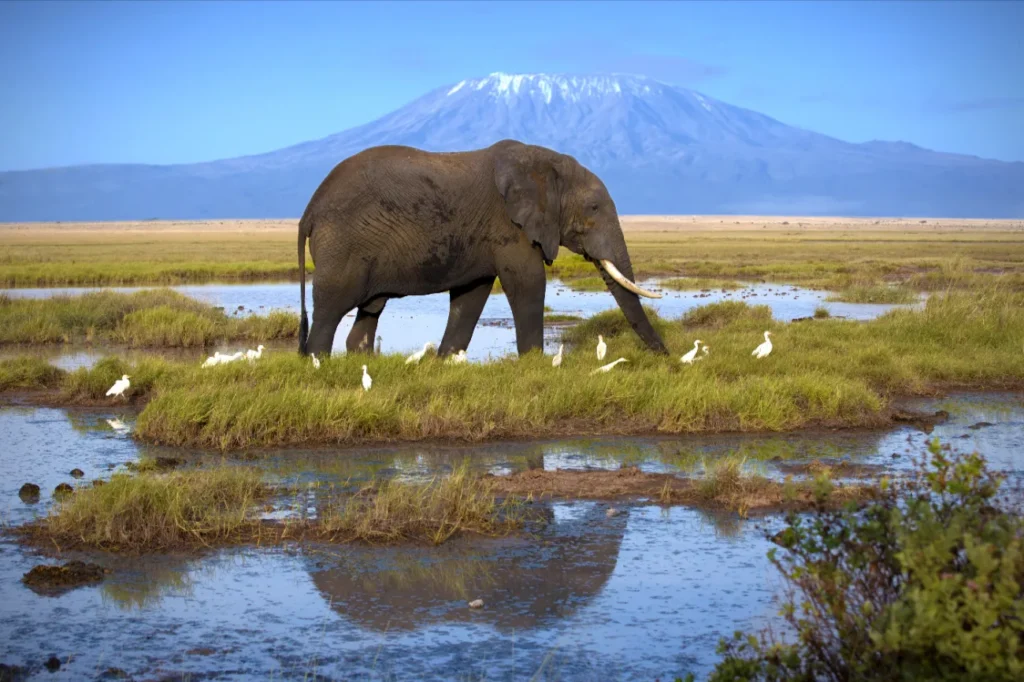
Ol Pejeta is a 360-square-kilometre conservancy on the Laikipia plateau in central Kenya, lying between Mount Kenya and the Aberdares with both visible on a clear day.

It holds the largest black rhino population in East Africa and is the only place in the world where the last two northern white rhinos survive, both female, under round-the-clock armed guard. Their story has made Ol Pejeta internationally known.

The conservancy also runs the Sweetwaters Chimpanzee Sanctuary, established with the Jane Goodall Institute, which cares for chimpanzees rescued from the illegal trade across central Africa. Chimpanzees are not native to Kenya, so this is the only place in the country to see them.

Ol Pejeta operates a working cattle ranch alongside its wildlife, and the integration of livestock and conservation is central to its model. All of the Big Five occur, and visitor numbers are capped well below those of the national parks.
People and culture

People and culture

Laikipia's conservancies emerged from former colonial ranches, and the region now holds a mosaic of private, community and group-ranch land that together protects more wildlife than many national parks.

Ol Pejeta channels a share of tourism revenue into surrounding communities through schools, clinics, water projects and agricultural support, and publishes what it spends, which is unusual and worth noting.

The conservancy's cattle operation is not incidental. Livestock and wildlife share the land under a managed grazing system, and the ranch is used to demonstrate that commercial cattle and conservation can be compatible on the same ground.

Sudan, the last male northern white rhino, died here in 2018, and his death drew global attention to the species' effective extinction. Efforts continue using stored genetic material and surrogate southern white rhinos.

Getting there

How to get there

Weather

Weather and climate in Ol Pejeta Wildlife Sanctuary

Ol Pejeta sits at around 1,800 metres on the Laikipia plateau, which gives it a temperate highland climate. Days reach 22°C to 28°C and nights fall to 9°C to 12°C, so warm layers are needed for early game drives year-round.

Month by month

High and low temperature and rainfall, shaded by how good the month is for a safari.

  • Jan

    27° / 10°

    40 mm

  • Feb

    28° / 10°

    40 mm

  • Mar

    27° / 11°

    80 mm

  • Apr

    25° / 12°

    160 mm

  • May

    24° / 12°

    110 mm

  • Jun

    23° / 10°

    30 mm

  • Jul

    22° / 9°

    25 mm

  • Aug

    23° / 9°

    30 mm

  • Sep

    25° / 10°

    30 mm

  • Oct

    26° / 11°

    60 mm

  • Nov

    25° / 12°

    140 mm

  • Dec

    26° / 11°

    70 mm

  • Excellent
  • Very good
  • Good
  • Fair
  • Avoid

Rain falls in two seasons, the long rains from March to May peaking in April and short rains through November. Annual rainfall is around 750 millimetres, lower than the highlands to the south, which keeps the vegetation open and game viewing straightforward.

July and August are cool and often overcast, matching the grey season across central Kenya, when temperatures struggle past 22°C and low cloud can persist for days.

Mount Kenya and the Aberdares are both visible from the conservancy on clear mornings, usually before cloud builds by mid-morning, which is one more reason to be out at first light.

Dust rises easily on the plateau tracks late in the dry season, and the open grassland offers little shelter from either sun or wind on a morning drive.

Best time to go

Best time to visit Ol Pejeta Wildlife Sanctuary

Best months
Jan–Mar, Jun–Oct, Dec

Ol Pejeta is fenced and intensively managed, so game viewing stays reliable year-round and the seasons matter less than in unfenced parks.

January to February and June to October are the drier windows and the most comfortable, with firm tracks, clear views toward Mount Kenya and reliable conditions for the night drives and lion tracking the conservancy offers.

July and August are cool and often grey despite being dry, which surprises visitors expecting equatorial warmth at 1,800 metres.

March to May brings the long rains, when the plateau is green, birding peaks and rates fall noticeably. Tracks soften but the conservancy remains accessible throughout.

Rhino sightings are consistent in every month given the population density and the level of monitoring, which makes Ol Pejeta an unusually dependable stop whatever time of year you travel.

Rhino sightings are consistent in every month given the population density and the level of monitoring, which makes Ol Pejeta an unusually dependable stop whatever time of year you travel and a sensible anchor for a northern circuit.

Things to do

Things to do in Ol Pejeta Wildlife Sanctuary

  1. Black Rhino Tracking

    Open Plains

    The largest black rhino population anywhere in East Africa.

  2. Northern White Rhinos

    Rhino Enclosure

    The last two individuals of the subspecies, under armed guard.

  3. Sweetwaters Chimpanzee Sanctuary

    Sweetwaters

    Rescued chimpanzees, and the only place to see them in Kenya.

  4. Night Game Drives

    Conservancy Tracks

    Permitted here, unlike in Kenya's national parks.

  5. Lion Tracking

    Research Vehicles

    Join researchers following collared lions across the plateau.

  6. Mount Kenya Views

    Northern Boundary

    The mountain rising to the east on clear mornings.

FAQ

Frequently asked questions

What is Ol Pejeta best known for?

Rhino, above all. It holds the largest black rhino population in East Africa and is the only place in the world where the last two northern white rhinos survive, both female and under round-the-clock armed guard. It also runs the Sweetwaters Chimpanzee Sanctuary with the Jane Goodall Institute, which is the only place in Kenya to see chimpanzees, as the species is not native to the country. Nanyuki has an airstrip served by scheduled flights from Wilson Airport, taking around an hour from Nairobi.

Can I see the northern white rhinos?

Yes, in a guarded enclosure within the conservancy, accompanied by their keepers. Najin and Fatu are the last two individuals of the subspecies, and both are female, so the northern white rhino is functionally extinct. Efforts continue using stored genetic material and southern white rhino surrogates. Seeing them is a sobering rather than uplifting experience, and worth going into with that expectation. The conservancy is fenced and intensively monitored, which is why rhino sightings stay reliable in every month.

Why are there chimpanzees in Kenya?

They are not native, and Sweetwaters exists because chimpanzees rescued from the illegal trade elsewhere in central Africa needed somewhere to live. The sanctuary was established with the Jane Goodall Institute and cares for animals that could not be returned to the wild. It is the only place in Kenya where chimpanzees can be seen, and the enclosures are large and well managed. Ol Pejeta pairs naturally with Lewa, Mount Kenya and Samburu on a northern Kenya circuit.

What can I do here that national parks do not allow?

Night game drives, lion tracking alongside researchers, guided walking and horseback riding all operate on the conservancy, and none are permitted in Kenya's national parks. Because Ol Pejeta is private land rather than a park, it can offer activities the parks cannot, and it caps visitor numbers well below what a national park would carry. Nanyuki has an airstrip served by scheduled flights from Wilson Airport, taking around an hour from Nairobi.

How do I get to Ol Pejeta?

The conservancy lies near Nanyuki, about 200 kilometres north of Nairobi and roughly three to four hours by road on good tarmac. Nanyuki has an airstrip served by scheduled flights from Wilson Airport, taking around an hour. The location makes it easy to combine with Mount Kenya, Lewa and the Samburu reserves on a northern Kenya circuit. The conservancy is fenced and intensively monitored, which is why rhino sightings stay reliable in every month.

How many nights should I stay?

Two nights suits most visitors and allows a rhino-focused drive, the chimpanzee sanctuary and either a night drive or lion tracking alongside the researchers. Three nights gives a more relaxed pace. Because the conservancy is fenced and compact at 360 square kilometres, it does not require the long driving distances that larger parks demand of visitors. Ol Pejeta pairs naturally with Lewa, Mount Kenya and Samburu on a northern Kenya circuit.

Is Ol Pejeta good value?

Conservancy fees are higher than national park entry, but they cover activities that parks do not permit and fund a conservation and community programme the conservancy publishes accounts for. Game viewing is reliable, rhino sightings near certain, and vehicle numbers capped. For travellers who want dependable sightings without crowds, the pricing is generally considered fair. Nanyuki has an airstrip served by scheduled flights from Wilson Airport, taking around an hour from Nairobi.

When is the best time to visit?

January to February and June to October are the drier windows and the most comfortable, with firm tracks and clear views toward Mount Kenya. July and August are cool and often grey despite being dry. March to May brings the long rains, when the plateau is green and rates fall, though rhino sightings remain consistent in every month given the density and monitoring. The conservancy is fenced and intensively monitored, which is why rhino sightings stay reliable in every month.

Explore other destinations

All destinations