
Kenya

Meru National Park

When to visit
January to February, June to October and December
Size
870 sq km
Temperature
31 'C
Rainfall
15mm
Age requirement
12 Year

Overview

About Meru National Park

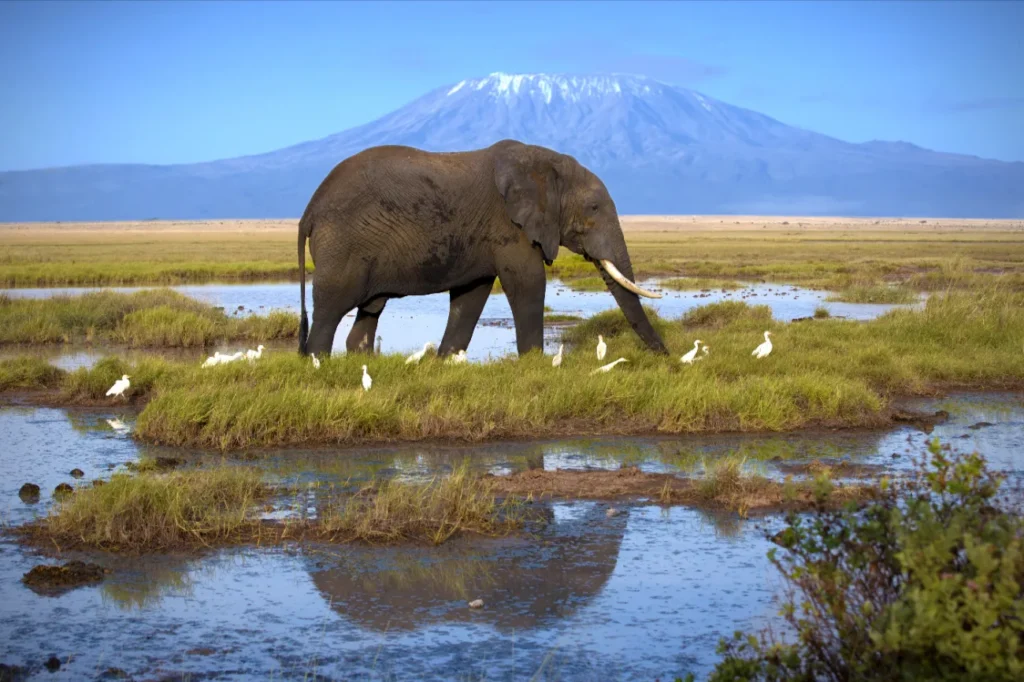
Meru National Park covers 870 square kilometres east of Mount Kenya, a landscape of open savanna, doum palm groves and thirteen permanent rivers running down off the highlands.

It is best known as the setting for Born Free, where George and Joy Adamson raised and released Elsa the lioness in the 1950s. Elsa’s grave lies within the park, and the story made Meru internationally famous long before it became easy to visit.

Poaching devastated the park’s wildlife through the 1980s, and it was effectively abandoned for years. A sustained recovery programme since the early 2000s has restored populations and reintroduced species, and Meru today is one of Kenya’s genuine conservation successes.

The park receives very few visitors relative to its size and quality, which is much of its appeal. A fenced rhino sanctuary within it protects both black and white rhino, and the rivers keep the landscape green when neighbouring country is bare.
People and culture

People and culture

The Meru people farm the fertile slopes between the park and Mount Kenya, growing coffee, tea and miraa, the stimulant leaf also known as khat, which is a major cash crop in this region.

The Tharaka live to the south and east in drier country, with a distinct language and long traditions of beekeeping and ironworking, and their communities border the park along its southern edge.

Meru's story is inseparable from George and Joy Adamson, whose work with Elsa the lioness and the book and film Born Free shaped popular understanding of African wildlife for a generation. Elsa's grave remains a place visitors seek out.

Community conservancies and ranches on the park's boundaries have grown in importance as buffers, and the recovery of Meru's wildlife since the poaching years has depended heavily on cooperation with the people living alongside it.

Getting there

How to get there

Weather

Weather and climate in Meru National Park

Meru is hot and low-lying, sitting between roughly 300 and 900 metres east of Mount Kenya. Days run between 29°C and 34°C and nights fall to 20°C to 23°C, making it one of the warmer Kenyan parks.

Month by month

High and low temperature and rainfall, shaded by how good the month is for a safari.

  • Jan

    34° / 22°

    20 mm

  • Feb

    35° / 22°

    15 mm

  • Mar

    35° / 23°

    50 mm

  • Apr

    32° / 23°

    110 mm

  • May

    31° / 22°

    60 mm

  • Jun

    30° / 20°

    10 mm

  • Jul

    29° / 20°

    10 mm

  • Aug

    30° / 20°

    10 mm

  • Sep

    32° / 21°

    10 mm

  • Oct

    33° / 22°

    45 mm

  • Nov

    31° / 21°

    120 mm

  • Dec

    32° / 21°

    50 mm

  • Excellent
  • Very good
  • Good
  • Fair
  • Avoid

Rain falls in two seasons, the long rains from March to May and short rains through November, with annual totals of around 600 to 800 millimetres, higher than Samburu but well below the highlands. The eastern side of the park is markedly drier.

Thirteen permanent rivers rise on Mount Kenya and the Nyambene Hills and run through the park, and they are what keep it green when the surrounding country dries out. Doum palm groves line their banks and hold game year-round.

Heat and humidity together make the middle of the day uncomfortable, so drives concentrate on early morning and late afternoon. Insect repellent matters here, as the riverine areas hold mosquitoes and tsetse in places.

Insect repellent matters here, as the riverine areas hold mosquitoes and tsetse in places, and long sleeves in neutral colours help considerably along the palm-lined watercourses.

Best time to go

Best time to visit Meru National Park

Best months
Jan–Mar, May–Dec

Meru's permanent rivers mean it holds game year-round, which makes it less starkly seasonal than Kenya's drier parks, though access still governs the calendar.

June to October is the main dry window and the strongest for game viewing, when the surrounding country dries and animals concentrate along the rivers. Tracks are firm and the park is at its most accessible.

January and February form a second dry window, hot and clear, with good game viewing and very few visitors, which is much of Meru's appeal.

March to May brings the long rains, when black cotton soil sections become genuinely difficult and some tracks close. The park is green and birding excellent, but access is the constraint.

November brings shorter rains that green the landscape briefly. Whatever the month, Meru sees a fraction of the traffic of Kenya's better-known parks, so solitude is close to guaranteed.

Whatever the month, Meru sees a fraction of the traffic of Kenya's better-known parks, so solitude is close to guaranteed and sightings are rarely shared with another vehicle at any point in the day.

Things to do

Things to do in Meru National Park

  1. Born Free Country

    Elsa'S Grave · Mulika

    The landscape where George and Joy Adamson released Elsa the lioness.

  2. Rhino Sanctuary

    Fenced Sanctuary

    Black and white rhino protected within a fenced area of the park.

  3. Doum Palm Rivers

    Thirteen Permanent Rivers

    Palm-lined watercourses running down off Mount Kenya.

  4. Game Drives

    Open Savanna

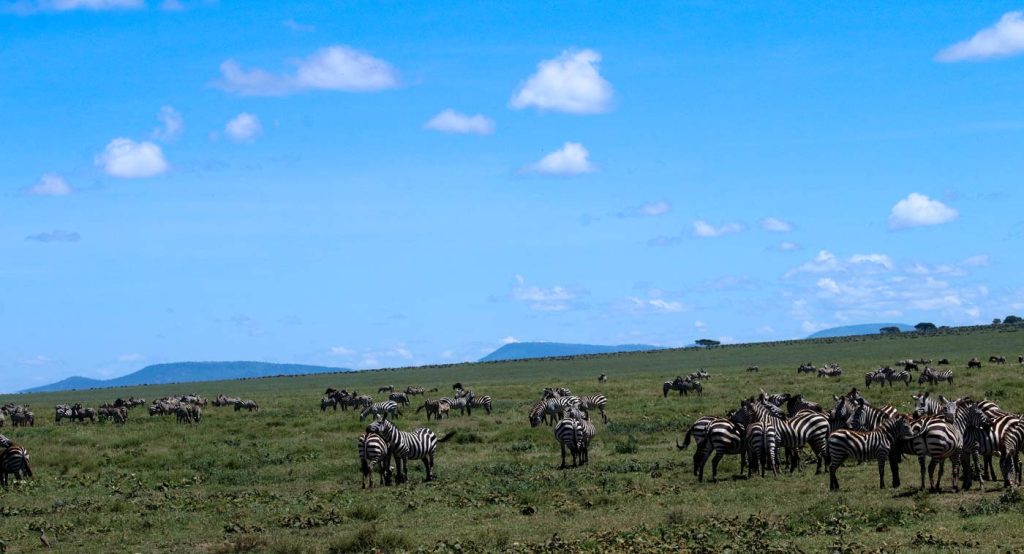
    Elephant, buffalo, reticulated giraffe and Grevy's zebra in near-solitude.

  5. Adamson's Falls

    Tana River

    Falls on the Tana at the park's remote southern boundary.

  6. Birdwatching

    Riverine Forest

    Over 400 species across river, palm grove and open savanna.

FAQ

Frequently asked questions

What is Meru National Park known for?

Born Free, above all. George and Joy Adamson raised and released Elsa the lioness here in the 1950s, and the resulting book and film made Meru internationally famous. Elsa's grave lies within the park. Beyond that, Meru is known for its thirteen permanent rivers, doum palm groves, a protected rhino sanctuary and for seeing remarkably few visitors relative to its quality. Meru sees a tiny fraction of the traffic of Kenya's better-known parks, so solitude is close to guaranteed.

Is Meru worth visiting given how remote it is?

For travellers who value solitude, very much so. Meru offers elephant, buffalo, reticulated giraffe, Grevy's zebra, lion and both rhino species across 870 square kilometres that see a tiny fraction of the traffic of the Maasai Mara. The landscape is genuinely beautiful, with palm-lined rivers cutting through open savanna. It suits a second or third Kenyan trip better than a first. Light aircraft serve airstrips inside the park from Wilson Airport, which many visitors prefer given the distance.

Can I see rhino at Meru?

Yes, within a fenced sanctuary inside the park protecting both black and white rhino as part of Kenya's national recovery programme. The sanctuary is large and well vegetated, so sightings are not automatic, but the odds are good, particularly for white rhino grazing in open areas. Entry to the sanctuary is arranged at the gate and is included in most guided visits. The park pairs well with Samburu and the northern conservancies on a longer circuit away from the crowds.

What happened to Meru's wildlife?

Poaching devastated the park through the 1980s and into the 1990s, wiping out its rhino entirely and severely reducing elephant and other populations, and Meru was effectively abandoned by tourism for years. A sustained recovery programme from the early 2000s, including reintroductions and a fenced rhino sanctuary, has restored much of what was lost. It is now regarded as one of Kenya's genuine conservation successes. Meru sees a tiny fraction of the traffic of Kenya's better-known parks, so solitude is close to guaranteed.

How do I get to Meru National Park?

By road it is around 350 kilometres from Nairobi, five to six hours via Nanyuki or Embu, with the final stretch rough in places. Light aircraft serve airstrips within the park from Wilson Airport, which many visitors prefer given the distance. Meru combines by road with Mount Kenya, Samburu and the northern conservancies on a longer circuit. Light aircraft serve airstrips inside the park from Wilson Airport, which many visitors prefer given the distance.

When is the best time to visit?

June to October is the main dry window and the strongest for game viewing, when surrounding country dries and animals concentrate along the rivers. January and February form a second dry window, hot and clear with very few visitors. March to May brings the long rains, when black cotton sections become genuinely difficult and some tracks close, though birding is excellent. The park pairs well with Samburu and the northern conservancies on a longer circuit away from the crowds.

Are the rivers reliable year-round?

Yes, and they are what distinguish Meru. Thirteen permanent rivers rise on Mount Kenya and in the Nyambene Hills and flow through the park regardless of local rainfall, lined with doum palms and riverine forest. This means Meru holds water and game even when neighbouring country is parched, and it accounts for the park's unusual greenness in the dry months. Meru sees a tiny fraction of the traffic of Kenya's better-known parks, so solitude is close to guaranteed.

Is Meru suitable for a first safari?

It can be, but most first-time visitors are better served by the Maasai Mara or Amboseli, where densities are higher and logistics simpler. Meru rewards travellers who already know what a safari feels like and want space, quiet and a landscape with real character. Combined with Samburu or Ol Pejeta it makes an excellent northern Kenya itinerary away from the crowds. Light aircraft serve airstrips inside the park from Wilson Airport, which many visitors prefer given the distance.

Explore other destinations

All destinations