Tanzania

Ruaha National Park

When to visit
June to October
Size
20,226 sq km
Temperature
30 'C
Rainfall
5mm
Age requirement
12 Year

Overview

About Ruaha National Park

Ruaha National Park is the largest in Tanzania, a vast wilderness of baobab, miombo woodland and sand rivers covering more than 20,000 square kilometres in the centre-south of the country.

Its defining characteristic is biogeographical. Ruaha sits on a transition zone where East and Southern African species overlap, which is why it holds animals the northern circuit simply does not. It is the most reliable place in Tanzania to see both greater and lesser kudu, and sable and roan antelope occur here alongside more familiar plains game.

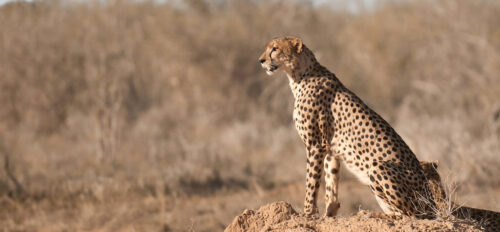
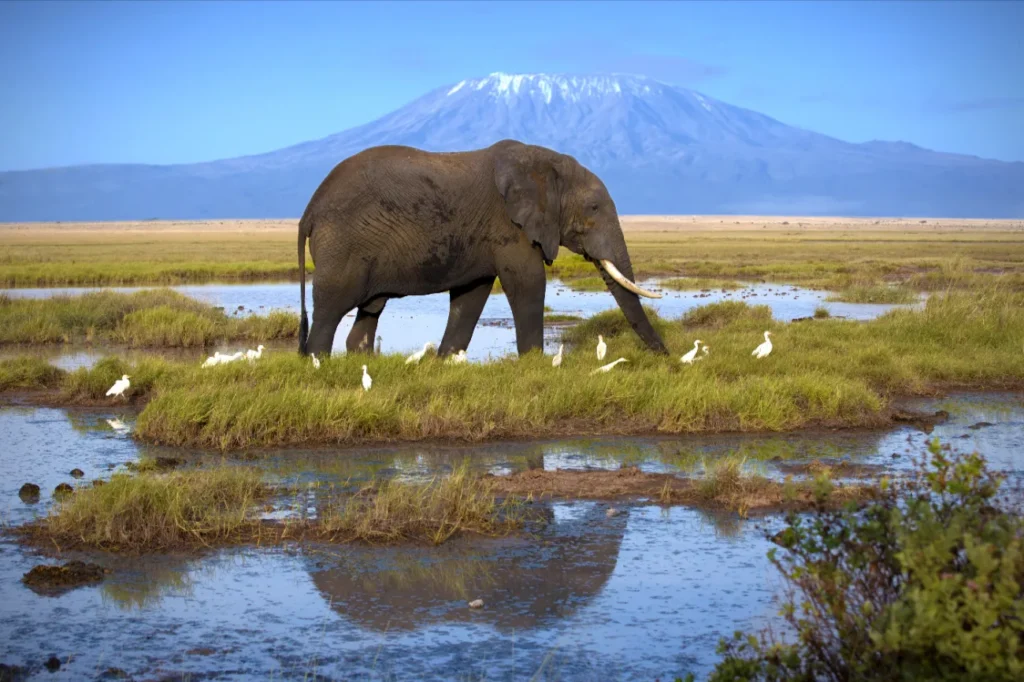
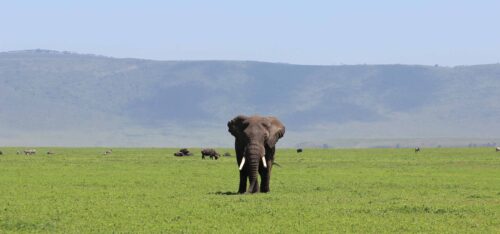
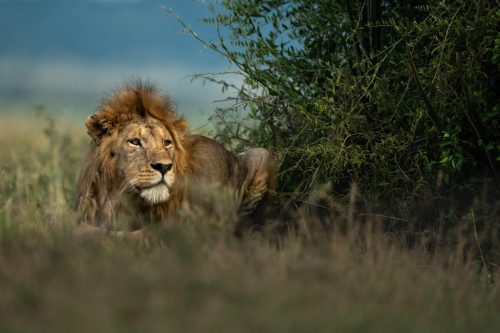
The park holds one of East Africa’s most significant elephant populations, and its lion prides are unusually large, with groups of twenty or more recorded. Leopard and cheetah are both present, and wild dog range across the miombo. The Great Ruaha River is the park’s spine, drawing game to its shrinking pools through the long dry season.

Despite its size and its wildlife, Ruaha receives a fraction of the visitors of the northern parks. Sightings are rarely shared with other vehicles, and the sense of genuine wilderness is much stronger than anything the Serengeti or Ngorongoro can offer in peak season.
People and culture

People and culture

The Hehe people dominate the Iringa highlands east of the park and are remembered above all for Chief Mkwawa, who led a prolonged and initially successful resistance against German colonial forces through the 1890s. His memorial at Kalenga, near Iringa, is a common stop on the drive in, and his story remains central to how the region understands itself.

Barabaig and Maasai herders graze the drier margins to the north of the park, moving cattle seasonally in a pattern that has brought them into periodic tension with conservation authorities over access to water and grazing. Gogo communities farm the country toward Dodoma to the east.

The Isimila Stone Age site outside Iringa holds one of the most significant Acheulean tool assemblages in East Africa, dating back several hundred thousand years, alongside a small canyon of eroded sandstone pillars. It is usually visited on the road journey rather than as a separate trip.

Village visits and cultural programmes around the park are generally arranged through lodges rather than the park authority, and are less developed than the equivalents on the northern circuit. That relative informality is part of the appeal for some visitors, though it means arrangements are best confirmed in advance rather than assumed.

Wildlife encounters

Wildlife encounters

Ruaha is the largest national park in Tanzania and one of the least visited relative to its size, which is much of its appeal. It sits on a transition zone where East and Southern African species overlap, so you can see animals here that occur nowhere else in the country's northern parks.

The park holds one of East Africa's most significant elephant populations, and lion prides here are unusually large. It is the most reliable place in Tanzania to see both greater and lesser kudu, along with sable and roan antelope. Leopard and cheetah are present, and the Great Ruaha River draws game to its pools through the dry months.

Common wild animals

  • African Elephant

    Abundant

  • African Lion

    Common

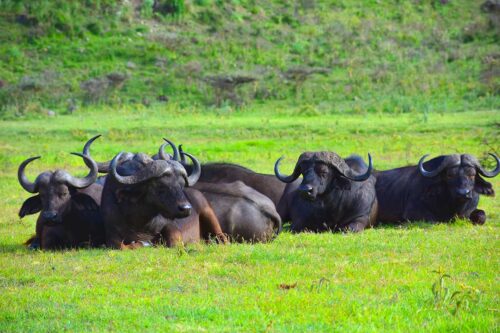
  • African Buffalo

    Common

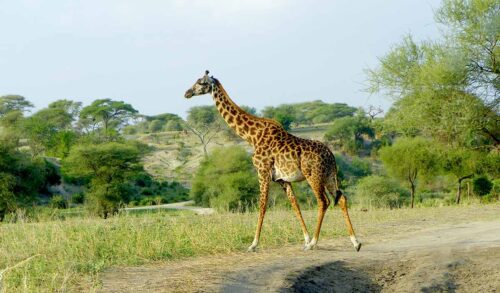
  • Giraffe

    Common

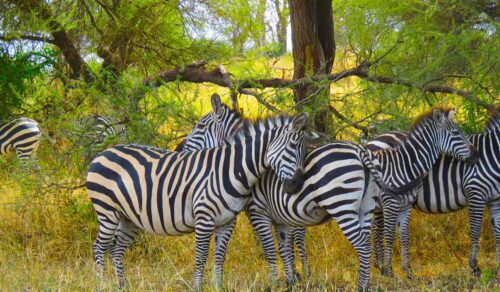
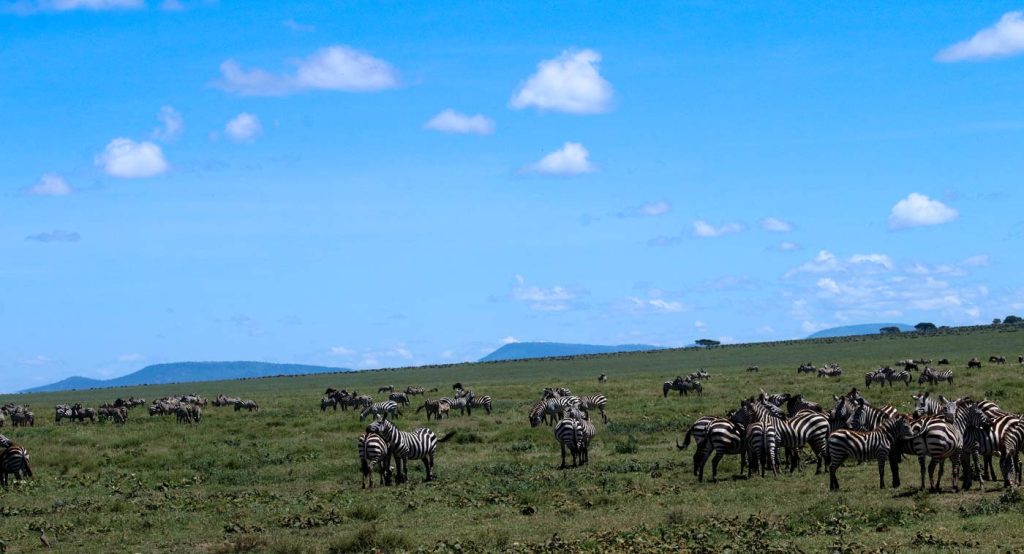
  • Plain Zebra

    Common

  • Leopard

    Occasional

  • 11 Days Spirit & Soul of Africa (Tanzania/Kenya) – Luxury

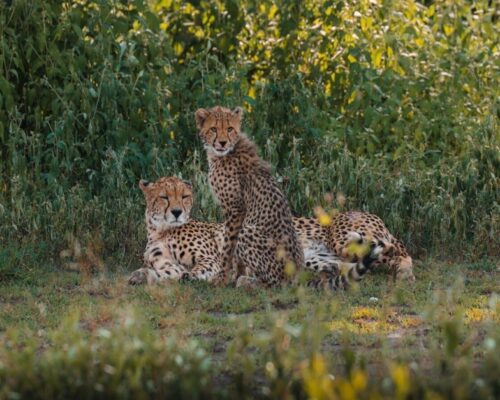
    Cheetah

    Occasional

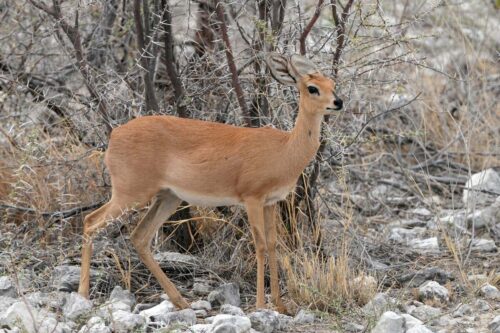
  • Dik-dik

    Occasional

Birdlife

Birdlife

Over 570 bird species have been recorded, one of the highest tallies of any Tanzanian park, again reflecting the overlap of northern and southern ranges.

Look for the crested barbet and racket-tailed roller alongside more familiar hornbills, bee-eaters and fish eagles. Migrants arrive from November, and the riverine stretches are productive year-round.

Common bird species

  • African Fish Eagle

    Common

  • Bateleur

    Common

  • Yellow-billed Hornbill

    Common

  • African Grey Hornbills

    Common

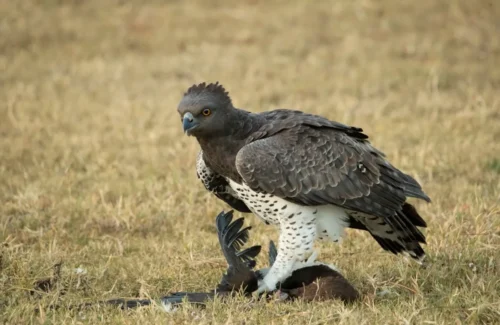
  • Martial Eagle

    Occasional

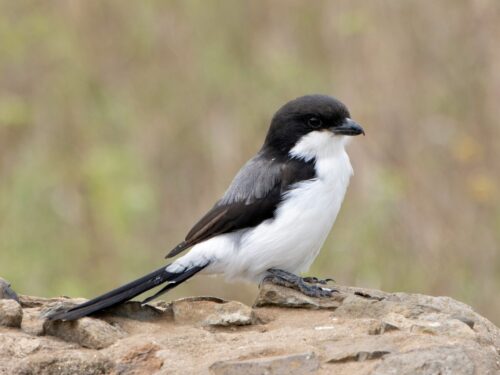
  • Common Fiscal

    Common

Getting there

How to get there

By Air

Scheduled light aircraft serve the Msembe airstrip inside the park, with connections from Dar es Salaam, Arusha, Selous and Zanzibar. This is by far the quickest route.

By Car

Ruaha lies roughly 130 kilometres west of Iringa on a rough road, and Iringa itself is about 500 kilometres from Dar es Salaam. Allow a full day of driving from the coast. A 4×4 is essential inside the park.

Weather

Weather and climate in Ruaha National Park

Ruaha has a hot, semi-arid climate shaped by its position at 750 to 1,900 metres on the edge of the Southern Highlands. Days run between 29°C and 34°C for much of the year, peaking in October just before the rains break, while nights in June and July can drop to 15°C.

Month by month

High and low temperature and rainfall, shaded by how good the month is for a safari.

  • Jan

    32° / 20°

    60 mm

  • Feb

    32° / 20°

    55 mm

  • Mar

    31° / 20°

    85 mm

  • Apr

    30° / 20°

    90 mm

  • May

    30° / 18°

    25 mm

  • Jun

    29° / 16°

    5 mm

  • Jul

    29° / 15°

    2 mm

  • Aug

    30° / 16°

    2 mm

  • Sep

    32° / 18°

    3 mm

  • Oct

    34° / 20°

    15 mm

  • Nov

    33° / 20°

    45 mm

  • Dec

    32° / 20°

    60 mm

  • Excellent
  • Very good
  • Good
  • Fair
  • Avoid

Unlike much of Tanzania, rain falls in a single season from December to April, with April the wettest at around 90 millimetres. Annual rainfall is modest at roughly 500 to 600 millimetres, far less than the northern parks, which is why the vegetation is dominated by baobab and drought-tolerant miombo.

That low rainfall is exactly what makes the Great Ruaha River so important. As the land dries through the long season from June to October, the river shrinks to a chain of pools and virtually every large animal comes to them.

The dry months bring clear skies, low humidity and firm tracks. Pack for genuine heat, and add a fleece for early mornings between June and August.

Best time to go

Best time to visit Ruaha National Park

Best months
Jun–Nov

Ruaha is a dry-season park above all, and the difference between the two halves of the year is more pronounced here than in most of Tanzania.

June to October is outstanding and the window to aim for. Water concentrates along the Great Ruaha River, vegetation thins dramatically, and the big predator sightings the park is known for become far more likely.

September and October are the peak of that season. October is hot, regularly above 34°C, but often the single most rewarding month, with game concentrated at the last water.

November to April brings the rains, a green flush and excellent birding as migrants arrive. Game disperses widely across a very large park, some roads become impassable, and several western camps open only for the dry months.

For a first visit built around predators and elephant, the mid-year window is the sensible choice.

Camps in the far west of the park generally open only for the dry months, so confirm availability before committing to green-season dates. Most itineraries link Ruaha with Nyerere by air rather than backtracking to Dar es Salaam.

Safety

Safety and security

Ruaha is remote, and that is the main practical consideration. Medical facilities are limited, distances between camps are long, and mobile coverage is patchy. Travel with comprehensive insurance that covers air evacuation.

Wildlife rules are the usual ones: stay in the vehicle outside designated areas, keep a respectful distance from elephant and buffalo, and travel with a licensed guide. Tsetse fly are present in the woodland belts, so wear long sleeves in neutral colours.

Health precautions

Malaria prophylaxis is strongly advised and should begin before you travel. Use repellent at dawn and dusk and sleep under a net.

Consult a travel clinic six to eight weeks ahead. Yellow fever, typhoid, hepatitis A and B and tetanus are commonly recommended for Tanzania. Given the park's isolation, carry a personal first aid kit and any prescription medication in hand luggage.

Things to do

Things to do in Ruaha National Park

  1. Great Ruaha River Drives

    Mwagusi · Msembe

    Predators gather at the shrinking sand-river pools through the dry months.

  2. Big Pride Lion Viewing

    Msembe · Mdonya

    Ruaha's prides are among the largest recorded anywhere in Africa.

  3. Kudu Country

    Miombo Woodland

    The most reliable place in Tanzania for both greater and lesser kudu.

  4. Walking Safari

    River Sectors

    Track on foot with an armed ranger through baobab and miombo country.

  5. Birdwatching

    Riverine Forest · Pans

    Over 570 species, with northern and southern ranges overlapping.

  6. Baobab Landscapes

    Msembe Escarpment

    Ancient baobabs above the river make the park's signature view.

  7. Fly-Camping

    Remote Sectors

    Overnight in a light mobile camp far from the main circuits.

  8. Chief Mkwawa Memorial

    Kalenga, Near Iringa

    The Hehe leader's memorial, usually visited on the drive in.

FAQ

Frequently asked questions

What makes Ruaha different from the northern parks?

Ruaha is the largest national park in Tanzania and sits on a transition zone where East and Southern African species overlap, so it holds animals the northern circuit does not. Greater and lesser kudu, sable and roan antelope are all reliable here. It also receives a fraction of the visitors that Serengeti or Ngorongoro do, which means sightings are rarely shared and the sense of wilderness is considerably stronger. Its sheer size, over 20,000 square kilometres, means you can drive for hours without meeting another vehicle.

When is the best time to visit Ruaha?

June to October is the strongest window by a clear margin. As the land dries, animals concentrate along the Great Ruaha River and its remaining pools, making predator sightings far more likely and driving conditions straightforward. October is the hottest month but often the most rewarding. The green season from November to April brings excellent birding, but game disperses widely and some roads become impassable. Camps in the far west of the park generally open only for the dry months, so confirm availability before committing to green-season dates.

How do I get to Ruaha National Park?

Flying is the practical choice for most visitors. Scheduled light aircraft serve the Msembe airstrip inside the park from Dar es Salaam, Arusha, Selous and Zanzibar. By road, the park lies about 130 kilometres west of Iringa on a rough track, and Iringa is roughly 500 kilometres from Dar es Salaam, so driving from the coast realistically takes a full day each way. Most itineraries link Ruaha with Nyerere or Katavi by air, since backtracking to Dar es Salaam by road costs two full days.

How many days should I spend in Ruaha?

Three to four nights is the sensible minimum. The park is vast and the drives between productive areas are long, so a shorter stay tends to be swallowed by transit. Four nights lets you cover the river circuits, spend time in the miombo woodland where the kudu are, and still have a morning free for a walking safari without feeling rushed at any point. Many operators pair three nights here with three in Nyerere, which makes a balanced southern circuit without excessive flying.

Is Ruaha suitable for a first safari?

It can be, though it suits travellers who value solitude over convenience. The park is remote, medical facilities are distant and most visitors arrive by light aircraft, which adds cost. First-time visitors wanting the classic big-game spectacle with easy logistics often prefer the northern circuit. Ruaha rewards those on a second or third trip, or anyone willing to trade polish for genuine wilderness. If you do come first time, budget for the flight rather than the long drive, and allow enough nights to justify the journey.

What wildlife is Ruaha best for?

Elephant and lion above all. The park holds one of East Africa's most significant elephant populations, and its lion prides are among the largest recorded anywhere, with groups of twenty or more not unusual. It is also the most dependable place in Tanzania for greater and lesser kudu, and sable and roan antelope occur in the miombo. Wild dog range widely and are seen with some regularity. Crocodile and hippo occupy the remaining river pools through the dry season, often in considerable numbers.

Can I combine Ruaha with other parks?

Yes, and most itineraries do. Ruaha pairs naturally with Nyerere National Park to the east, the two forming the backbone of Tanzania's southern circuit, and light aircraft connect them directly without returning to Dar es Salaam. Some itineraries add Katavi in the far west for a genuinely remote extension, or finish on the coast at Zanzibar, which is a straightforward onward flight. Booking the internal flights as part of one itinerary is usually cheaper than arranging each leg separately.

Are walking safaris available in Ruaha?

Yes, and they are one of the park's strengths. Guided walks operate from several camps, led by an armed ranger alongside your guide, typically for two to three hours in the early morning through baobab and miombo country. The focus shifts from big sightings to tracks, dung, plants and birdsong. Most operators set a minimum age of twelve to fifteen, and walks should be booked when you book the camp.

Explore other destinations

All destinations