Tanzania

Mikumi National Park

When to visit
June to October
Size
3,230 sq km
Temperature
30 'C
Rainfall
10mm
Age requirement
12 Year

Overview

About Mikumi National Park

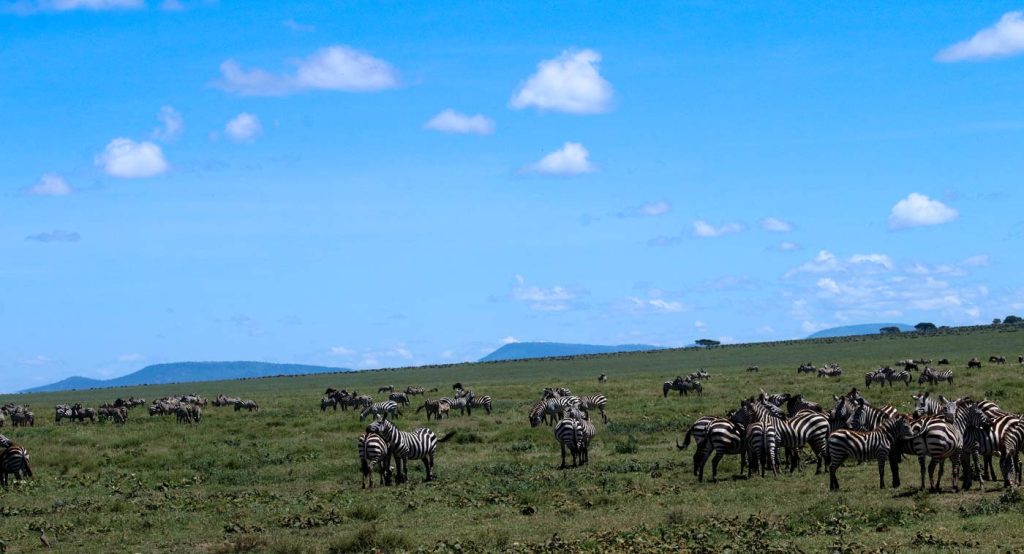
Mikumi National Park is the most accessible major reserve in southern Tanzania, covering 3,230 square kilometres where the open Mkata Floodplain spreads out beneath the Uluguru Mountains.

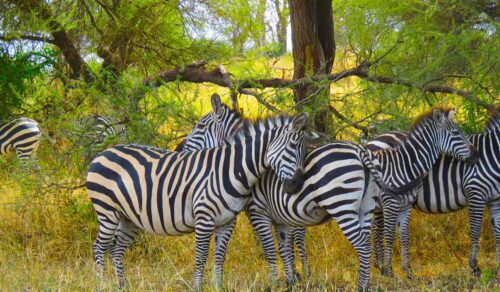
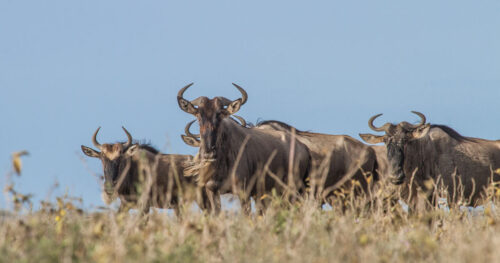
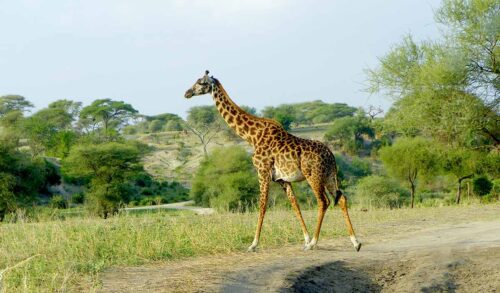
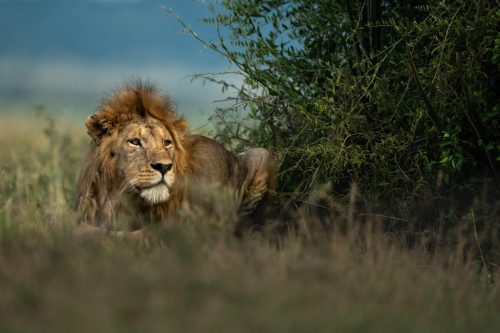
The floodplain is often compared to the Serengeti, and in the first hour of light, with herds of zebra, wildebeest and buffalo spread across the grass and the mountains rising behind them, the comparison holds. Elephant, eland and Masai giraffe are common, and the park’s lions are resident and occasionally rest in trees, much as they do at Lake Manyara.

South of the floodplain the country rises into the wooded Vuma Hills, where greater kudu and sable antelope favour the miombo, and the hippo pools near the main gate are a reliable first stop for anyone entering from the highway.

Because the surfaced TANZAM highway runs straight through it, Mikumi is the one Tanzanian park where a genuine day safari from Dar es Salaam is practical. It also adjoins Nyerere National Park to the south, and the two together form the natural core of a southern circuit that most visitors to Tanzania never see.
People and culture

People and culture

The Uluguru Mountains rising north-east of the park are home to the Luguru, whose terraced hillside farms are among the most intensively cultivated landscapes in Tanzania, and who are unusual in the region for a matrilineal inheritance system in which land passes through the female line.

Along the highway corridor and in the Kilombero valley to the south, Pogoro and Ndamba communities farm rice, maize and sugar on some of the most productive land in the country. The valley is one of the largest freshwater wetlands in East Africa and supports a dense rural population.

Morogoro, about two hours east, makes a practical base for cultural walks into the Uluguru foothills, spice and fruit markets, and the short trek to Morningside on the mountain slopes. The town is home to Sokoine University of Agriculture, which gives it a substantial student population and a livelier feel than its size suggests.

Cultural arrangements around Mikumi are less formalised than on the northern circuit, so village visits are best organised through your lodge or through the tourist office in Morogoro rather than negotiated on arrival. Guides from the surrounding villages lead most walks into the mountains.

Wildlife encounters

Wildlife encounters

Mikumi's open Mkata Floodplain is often likened to the Serengeti, and the comparison holds up in the early morning when herds spread across the grass beneath the Uluguru range.

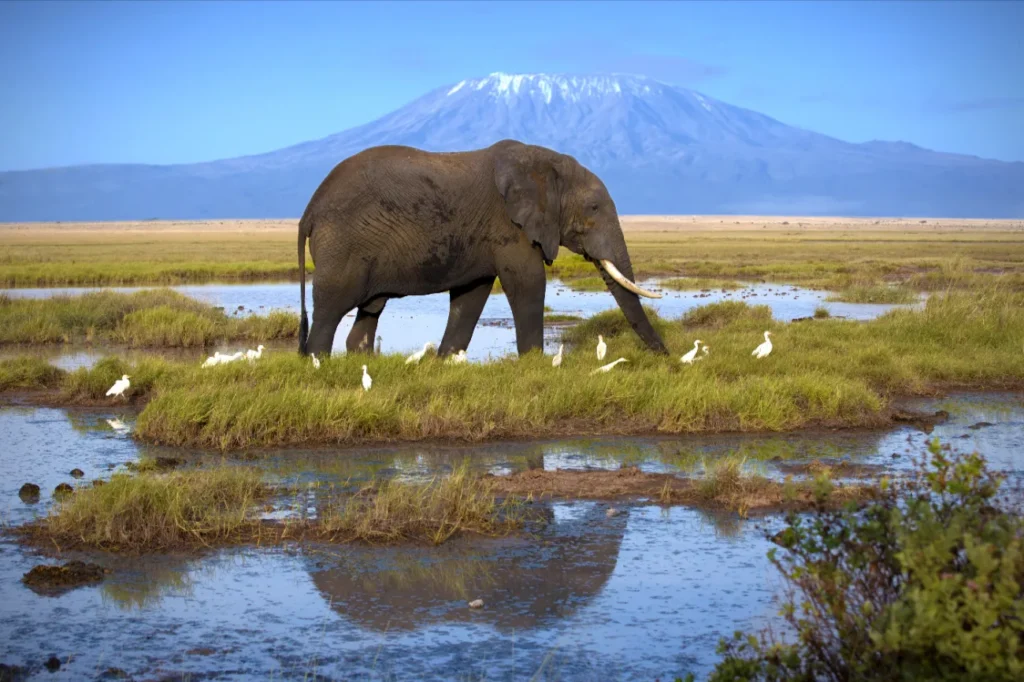
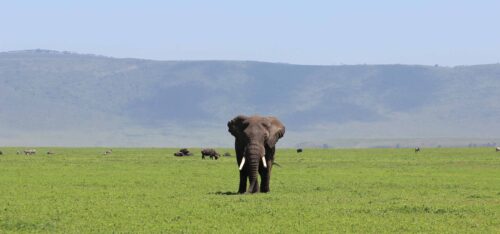
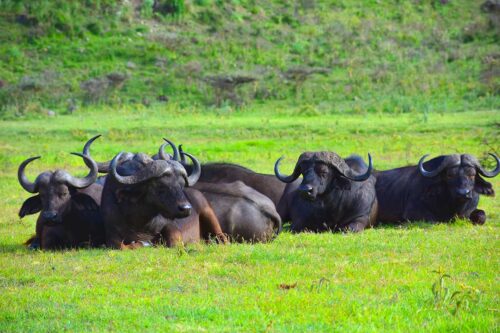
Elephant, buffalo, zebra, wildebeest, impala and eland are all common on the floodplain, and the park's Masai giraffe are frequently seen alongside the road. Lion are resident and sometimes climb trees here; leopard are present but shy. Greater kudu and sable favour the wooded Vuma Hills in the south. The hippo pools near the main gate are a reliable first stop.

Common wild animals

  • African Elephant

    Common

  • African Buffalo

    Common

  • Plain Zebra

    Abundant

  • Wildebeest

    Common

  • Giraffe

    Common

  • African Lion

    Occasional

  • Leopard

    Rare

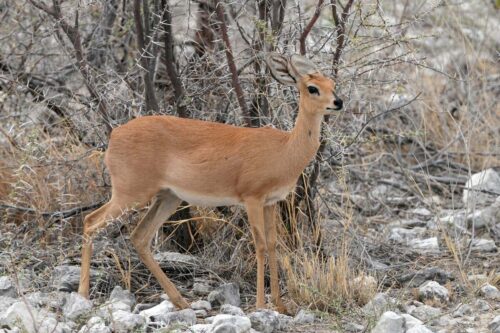
  • Dik-dik

    Occasional

Birdlife

Birdlife

Around 400 bird species have been recorded, and the mix of floodplain, woodland and seasonal wetland makes for productive, easy birding close to the road.

Lilac-breasted roller, yellow-throated longclaw, bateleur and open-country raptors are common, with European migrants arriving from November through April.

Common bird species

  • Bateleur

    Common

  • African Fish Eagle

    Common

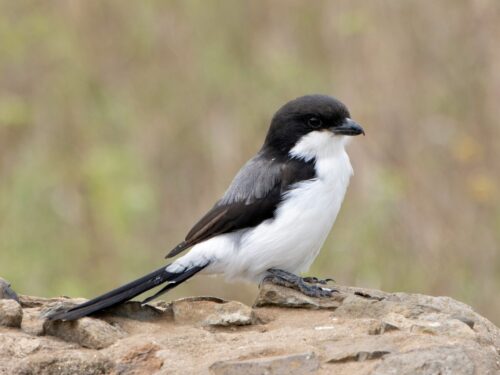
  • Common Fiscal

    Common

  • Yellow-billed Hornbill

    Common

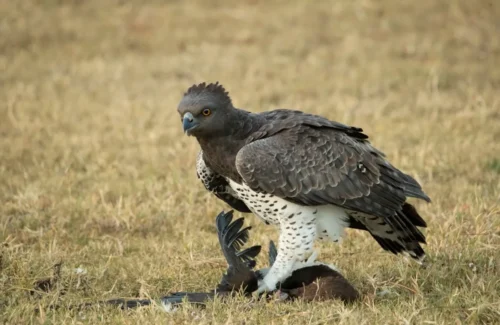
  • Martial Eagle

    Occasional

  • African Grey Hornbills

    Occasional

Getting there

How to get there

By Car

Mikumi is the most accessible major park in southern Tanzania. The surfaced TANZAM highway runs straight through it, and the drive from Dar es Salaam covers roughly 280 kilometres in four to five hours. Morogoro is about two hours away.

By Air

Light aircraft serve the Mikumi airstrip, usually on circuits linking Nyerere, Ruaha and Dar es Salaam. Because the road access is so straightforward, most visitors drive.

Weather

Weather and climate in Mikumi National Park

Mikumi is warm year-round, sitting at around 550 metres on the floodplain with the Uluguru Mountains rising to over 2,600 metres to the north-east. Days run between 28°C and 32°C and nights rarely fall below 16°C, so heavy layers are unnecessary though a light fleece is useful at dawn.

Month by month

High and low temperature and rainfall, shaded by how good the month is for a safari.

  • Jan

    32° / 21°

    110 mm

  • Feb

    32° / 21°

    95 mm

  • Mar

    31° / 21°

    130 mm

  • Apr

    30° / 21°

    180 mm

  • May

    29° / 19°

    60 mm

  • Jun

    28° / 17°

    15 mm

  • Jul

    28° / 16°

    10 mm

  • Aug

    29° / 16°

    8 mm

  • Sep

    31° / 18°

    10 mm

  • Oct

    32° / 20°

    30 mm

  • Nov

    32° / 21°

    100 mm

  • Dec

    32° / 21°

    110 mm

  • Excellent
  • Very good
  • Good
  • Fair
  • Avoid

Rain falls in two seasons. The long rains run from March to May, peaking in April at around 180 millimetres, and the short rains arrive in November and December. Annual rainfall is roughly 800 to 1,000 millimetres, with the Uluguru slopes catching considerably more.

The dry months from June to October bring reliably clear skies, firm roads and short grass across the Mkata Floodplain. Sightlines are long, animals gather at the remaining water, and every circuit stays passable.

April is the month to approach with care. The black cotton soil off the main circuits becomes genuinely difficult when saturated, and a vehicle without proper clearance and traction will struggle.

Pack light, breathable clothing, strong sun protection and insect repellent, and add a waterproof between November and May.

Best time to go

Best time to visit Mikumi National Park

Best months
Jun–Nov

Mikumi works year-round, helped by its accessibility, but the dry and wet seasons offer quite different experiences.

June to October is the dry season and the strongest period for game viewing. Grass on the Mkata Floodplain is short, animals gather at the remaining water, and every road stays passable. This is when the park most resembles the open plains comparisons it attracts.

November to February is green and considerably quieter. Birding peaks with the arrival of migrants, the Uluguru backdrop is at its most dramatic, and rates fall away from the dry-season peak.

March to May brings the long rains, with April the wettest and the one to plan around. The park stays open but the black cotton soil off the main circuits becomes difficult.

Because the surfaced highway crosses the park, Mikumi stays reachable when other southern parks become awkward.

If you are visiting from Dar es Salaam on a tight schedule, the dry months give much the best return on a single day, since the floodplain is at its most productive when the grass is short and the water concentrated.

Safety

Safety and security

The main hazard at Mikumi is unusual among Tanzanian parks: the highway. Vehicles cross the park at speed and wildlife collisions are a genuine problem, so observe the posted limits and stay alert on the through road, particularly at dusk.

Otherwise the standard rules apply. Remain in your vehicle away from designated areas, keep clear of elephant and buffalo, and use a licensed guide. Roads off the main circuits soften considerably during the rains.

Health precautions

Mikumi lies in a malaria zone at low altitude, so prophylaxis is strongly advised, along with repellent at dawn and dusk.

Consult a travel clinic before departure regarding yellow fever, typhoid, hepatitis A and B and tetanus. Morogoro has the nearest hospital of any size, roughly two hours from the park, and Dar es Salaam is the point of reference for anything serious.

Things to do

Things to do in Mikumi National Park

  1. Mkata Floodplain Drives

    Mkata Plain

    Open grassland with the Uluguru Mountains rising behind the herds.

  2. Hippo Pools

    Near Mikumi Gate

    Pods of hippo and waterbirds, minutes from the park entrance.

  3. Tree-Climbing Lions

    Mkata · Vuma Hills

    Mikumi's lions occasionally rest in trees, as at Manyara.

  4. Vuma Hills Woodland

    Southern Sector

    Miombo country holding greater kudu, sable and shy leopard.

  5. Birdwatching

    Floodplain · Seasonal Pans

    Around 400 species, with migrants from November to April.

  6. Giraffe Viewing

    Roadside Circuits

    Masai giraffe browse close to the main tracks throughout the year.

  7. Day Trip from Dar es Salaam

    Tanzam Highway

    Close enough to the coast for a genuine one-day safari.

  8. Uluguru Cultural Walk

    Morogoro Foothills

    Luguru terraced farms and hillside villages outside the park.

FAQ

Frequently asked questions

Can I visit Mikumi as a day trip from Dar es Salaam?

Yes, and it is the only major Tanzanian park where that is genuinely practical. The surfaced highway covers the 280 kilometres from Dar es Salaam in four to five hours, so an early start allows several hours of game driving before the return. That said, an overnight stay transforms the experience, because the floodplain is at its best in the first hour of light. Leaving before dawn makes the difference between a rushed drive-through and a genuine morning in the park.

What animals will I see at Mikumi?

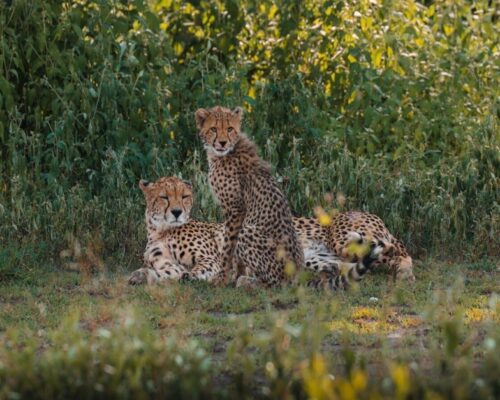
Elephant, buffalo, zebra, wildebeest, impala, eland and Masai giraffe are all common on the Mkata Floodplain, and the hippo pools near the gate are reliable. Lion are resident and occasionally rest in trees here, much as they do at Lake Manyara. Leopard are present but seldom seen. Greater kudu and sable antelope favour the wooded Vuma Hills in the south of the park. Cheetah and wild dog are recorded occasionally but should be treated as a bonus rather than an expectation.

Is the highway through the park dangerous for wildlife?

It is a real problem, and the single biggest hazard at Mikumi. The TANZAM highway crosses the park and vehicles frequently exceed the posted limits, causing wildlife collisions every year. Speed restrictions are enforced within park boundaries and there are marked crossing points. Drive slowly, stay alert at dawn and dusk, and treat the through road with far more caution than an ordinary highway. Warning signs mark the worst stretches, and driving through the park after dark is strongly discouraged.

How does Mikumi compare with the Serengeti?

The Mkata Floodplain genuinely resembles the Serengeti's open grassland, and the comparison is made often, but Mikumi is far smaller at 3,230 square kilometres and does not host a migration. What it offers instead is accessibility and quiet: a fraction of the visitors, a fraction of the cost, and the Uluguru Mountains as a backdrop that the northern plains simply do not have. It also adjoins Nyerere National Park, so the two combine easily into a southern circuit few visitors see.

When should I visit Mikumi?

June to October is the dry season and the most reliable time for game viewing, with short grass on the floodplain and animals concentrated near water. November to May is green, much quieter and better for birds as migrants arrive, though April is genuinely wet and the black cotton soil off the main circuits becomes difficult. Both seasons work; the dry months are safer for a first visit. Because the surfaced highway crosses the park, Mikumi stays reachable when other southern parks become awkward.

How many days should I spend at Mikumi?

One or two nights suits most visitors. The park is compact enough that two full game drives cover the main floodplain circuits and the hippo pools comfortably, and a second night allows time to explore the Vuma Hills in the south where the habitat and species change. Many itineraries use Mikumi as a first or last stop on a longer southern circuit including Nyerere and Ruaha. Many itineraries use it as a first or last stop on a longer southern circuit including Nyerere and Ruaha.

Can I combine Mikumi with Udzungwa or Nyerere?

Both combinations work well and are common. Udzungwa Mountains National Park lies about an hour further south-west on largely surfaced road, offering rainforest hiking and endemic primates in complete contrast to Mikumi's open plains. Nyerere National Park adjoins Mikumi to the south and can be reached by road or by a short light aircraft hop, making a three-park southern circuit straightforward. All three sit within a few hours of one another, which makes a southern circuit far less flight-dependent than the north.

Is Mikumi good for a first safari?

It suits a first safari well for anyone short on time or budget. Access is easy, the floodplain gives long sightlines and reliable general game, and the cost is far below the northern circuit. What it does not offer is the density and drama of the Serengeti or Ngorongoro, nor a migration. Treat it as an excellent introduction rather than a substitute for the better-known parks. Treat it as an excellent and affordable introduction rather than a substitute for the better-known northern parks.

Recommended tours

Explore Mikumi National Park with these recommended tours.

All tours in Mikumi National Park

Discover Mikumi National Park

Everything we list for Mikumi National Park, in one place.

Explore other destinations

All destinations