
Tanzania

Moshi Town

When to visit
January to February and June to October
Size
59 sq km
Temperature
28 'C
Rainfall
25mm

Overview

About Moshi Town

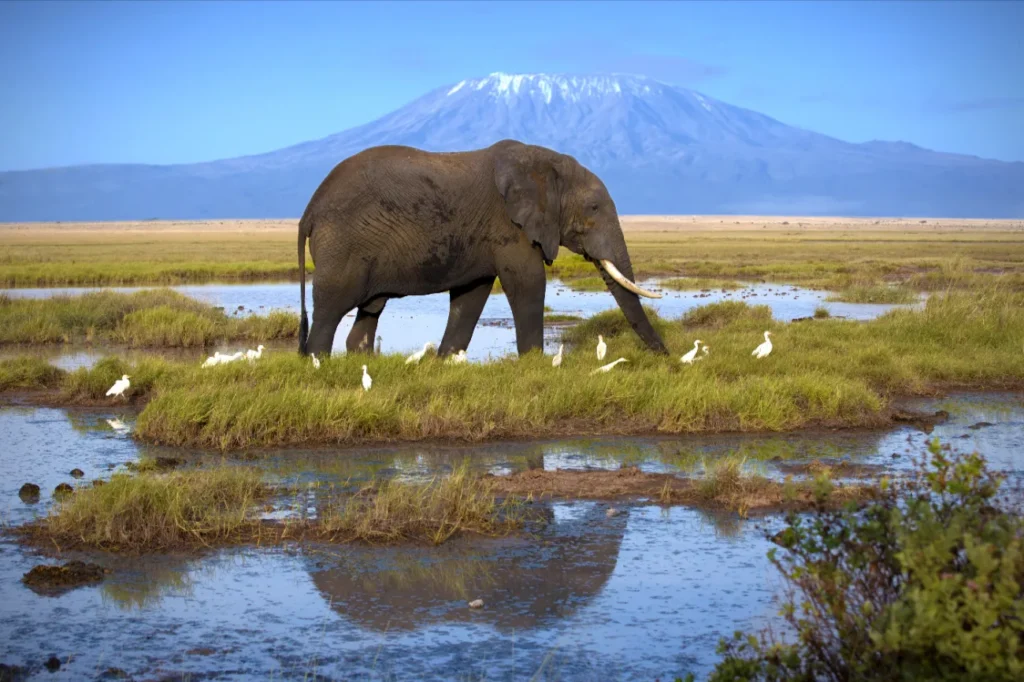
Moshi sits directly beneath Kilimanjaro at around 890 metres, and on a clear morning the mountain fills the northern skyline from almost anywhere in town.

It is the base for most Kilimanjaro climbs, with the Marangu and Machame gates within easy reach, and it has a calmer, more walkable feel than Arusha 80 kilometres to the west. The centre is compact enough to cross on foot, with a good spread of cafes and small hotels.

The town is also the heart of Tanzania’s arabica coffee country, grown on the Chagga smallholdings that terrace the mountain’s lower slopes. Coffee tours, waterfall walks and village visits fill the days before or after a climb.

For visitors not climbing, Moshi works as an unhurried base with genuine things to do: the Materuni falls, the Kikuletwa hot springs, the Chagga caves at Marangu, and a market considerably less pressured than Arusha’s.
People and culture

People and culture

The Chagga have farmed the southern slopes of Kilimanjaro for centuries, using an intricate system of irrigation furrows and banana-and-coffee intercropping that supports one of the densest rural populations in Tanzania and has been studied as a model of sustainable hill farming.

Village visits around Marangu and Materuni take in coffee processing by hand, from picking through pulping and roasting to a cup drunk on the spot. The Chagga underground caves, dug as refuges during the nineteenth-century Maasai raids, run for surprising distances into the hillsides.

The Chagga were among the earliest communities in Tanzania to establish cooperatives, and the Kilimanjaro Native Cooperative Union, founded in 1925, is one of the oldest in Africa. That history shapes the region's relative prosperity and its strong tradition of education.

Porters and guides for Kilimanjaro come overwhelmingly from these communities, and the local economy depends heavily on the mountain, which is why the question of porter wages and conditions matters as much socially as ethically.

Getting there

How to get there

By Air

Kilimanjaro International Airport (JRO) is about 40 kilometres west, roughly 45 minutes by road, with direct services from Europe, the Middle East and across East Africa.

By Road

Arusha is 80 kilometres west, about ninety minutes on good tarmac. Dar es Salaam is a long day's drive at roughly 560 kilometres. Regular buses and shuttle services connect all three, and the Marangu and Machame trailheads are under an hour from town.

Weather

Weather and climate in Moshi Town

At 890 metres Moshi is warmer than Arusha, with days between 26°C and 30°C and nights around 15°C to 18°C. The mountain generates its own weather, so conditions on the slopes differ sharply from those in town.

Month by month

High and low temperature and rainfall, shaded by how good the month is for a safari.

  • Jan

    28° / 15°

    50 mm

  • Feb

    29° / 15°

    60 mm

  • Mar

    28° / 16°

    140 mm

  • Apr

    26° / 16°

    230 mm

  • May

    25° / 15°

    150 mm

  • Jun

    24° / 13°

    30 mm

  • Jul

    23° / 12°

    20 mm

  • Aug

    24° / 12°

    20 mm

  • Sep

    26° / 13°

    20 mm

  • Oct

    28° / 15°

    40 mm

  • Nov

    27° / 16°

    140 mm

  • Dec

    27° / 15°

    90 mm

  • Excellent
  • Very good
  • Good
  • Fair
  • Avoid

The long rains fall March to May, with April the wettest, and short rains arrive through November. Annual rainfall is around 900 millimetres in town and considerably more on the forest belt above, which sustains the coffee and banana farming that defines the region.

June to October is dry and clear, the main climbing season, and Kilimanjaro is most reliably visible in the early morning before cloud builds around the summit. Rooftop bars and the northern edge of town give the clearest sightlines.

Altitude is the point that matters most for climbers. Moshi sits at 890 metres while the Kilimanjaro summit stands at 5,895, a difference of close to forty degrees, and summit night regularly falls below minus 10°C regardless of how warm the town felt at the trailhead. Pack for both climates rather than for the one you arrive in.

Best time to go

Best time to visit Moshi Town

Best months
Jan–Feb, Jun–Dec

Moshi's calendar is governed almost entirely by the Kilimanjaro climbing seasons rather than by anything happening in the town itself.

June to October is the main dry window and the busiest climbing season, with the most reliable trail conditions and the clearest mountain views from town. Book the climb and accommodation well ahead, as the better operators fill months in advance for August and September.

December to February is the second climbing window, warmer and often clearer than mid-year, though the January peak brings higher rates. Snow on the summit is more likely, which many climbers consider a bonus.

March to May brings the long rains, when climbing is possible but considerably harder underfoot and the summit is often hidden for days. Rates fall sharply and the coffee slopes are at their greenest, which suits visitors not here to climb.

November sits between the two, with short rains arriving as afternoon showers. It is quieter and cheaper than either peak season, and trails are usually still in reasonable condition, which makes it a fair compromise for anyone flexible on dates.

Safety

Safety and security

Moshi is quieter and generally safer than Arusha, and the town centre is comfortable to walk during the day. Standard precautions apply after dark: use taxis, keep phones out of sight and avoid unlit areas.

The main risk is commercial rather than criminal. Kilimanjaro climbs are sold aggressively by unlicensed agents, and cut-price operators routinely underpay porters and cut safety corners. Verify the operator's licence and their porter welfare policy before booking.

Health precautions

Moshi is at moderate altitude but malaria is present, so prophylaxis is advised. Use repellent in the evenings.

For anyone climbing, altitude sickness is the real concern: KCMC in Moshi is the referral hospital for Kilimanjaro evacuations and one of the best in the country. Ensure your insurance explicitly covers trekking above 4,000 metres, which many standard policies exclude.

Things to do

Things to do in Moshi Town

  1. Kilimanjaro Views

    Town Centre · Shira Road

    The mountain fills the skyline on clear mornings before cloud builds.

  2. Materuni Waterfall

    Materuni Village

    A 80-metre fall on the mountain's lower slopes, reached on foot.

  3. Chagga Coffee Tour

    Materuni · Marangu

    Hand-processing arabica with the families who grow it.

  4. Marangu and Chagga Caves

    Marangu

    Underground refuges dug during the nineteenth-century Maasai raids.

  5. Kikuletwa Hot Springs

    Chemka, West Of Moshi

    Clear thermal pools under fig trees, an easy half-day trip.

  6. Moshi Market

    Central Moshi

    Produce, spices and fabric in a calmer setting than Arusha's markets.

FAQ

Frequently asked questions

Is Moshi or Arusha the better base for Kilimanjaro?

Moshi is closer to the mountain and to the Marangu and Machame gates, and has a calmer, more walkable feel, so most climbers stay here. Arusha has more flight connections through its own airstrip, a wider hotel range and is better placed for a safari before or after. Many itineraries combine the two. Acclimatisation matters too: Moshi sits lower at around 890 metres, so some climbers spend a night higher up first.

Can I see Kilimanjaro from Moshi?

Yes, and the view is one of the reasons to stay. The mountain dominates the northern skyline in clear conditions, but it generates its own weather and is frequently wrapped in cloud from mid-morning onwards. Early morning, roughly between six and nine, gives the best chance, and the dry seasons of June to October and December to February are far more reliable than the rains. Rooftop bars give the clearest sightlines.

What is there to do in Moshi if I am not climbing?

More than most people expect. Materuni Waterfall and its neighbouring coffee farms make an excellent full day, combining an 80-metre fall with hand-processing arabica alongside Chagga growers. The Kikuletwa hot springs west of town are a relaxed half day, and the Chagga caves at Marangu offer real historical interest. Moshi is also a comfortable place simply to rest, with a walkable centre and a far gentler pace than Arusha. Moshi is also considerably cheaper than Arusha for accommodation and food, which matters on a longer stay either side of a climb.

How do I choose a Kilimanjaro operator?

Price is the wrong starting point. Cut-rate climbs are subsidised by underpaying porters and by thinning safety margins, including oxygen and evacuation cover. Check the operator holds a valid licence, ask directly about porter wages and load limits, and confirm what medical equipment accompanies the group. Ensure your own insurance explicitly covers trekking above 4,000 metres, which many policies exclude. The Kilimanjaro Porters Assistance Project lists partner companies meeting agreed standards.

Which Kilimanjaro route should I choose?

Machame is the most popular, a six or seven day route with good acclimatisation and fine scenery. Lemosho and the Northern Circuit are longer, quieter and have the highest success rates because they allow more time to adjust. Marangu is the only route with hut accommodation and is often sold as the easy option, though its shorter profile actually lowers summit success. Rongai approaches from the drier north and suits the wet season.

How long should I allow in Moshi around a climb?

At least one night before and one after, and preferably two either side. Arriving a day early allows for delayed luggage, a proper briefing and gear check, and a night's sleep before the trek starts. Afterwards, most climbers want a full day to rest before flying, and the coffee farms and hot springs make a gentle way to spend it while your legs recover. The town is compact enough to cross on foot in twenty minutes, which is unusual in Tanzania and makes it easy to explore independently.

How do I get to Moshi?

Kilimanjaro International Airport is about 40 kilometres west, roughly 45 minutes by road, with direct services from Europe, the Middle East and across East Africa. Arusha is 80 kilometres west, about ninety minutes on good tarmac, and Dar es Salaam is a long day's drive at roughly 560 kilometres. Regular buses and shuttle services connect all three, and most hotels will arrange an airport transfer. Book anything mountain-related through an operator with a physical office in town rather than an agent met on the street.

Is Moshi safe for visitors?

Moshi is quieter and generally safer than Arusha, and the town centre is comfortable to walk during the day. Standard precautions apply after dark: use taxis, keep phones out of sight and avoid unlit areas. The main risk is commercial rather than criminal, in the form of unlicensed agents selling cut-price climbs. Verify any operator's credentials and never hand over cash without a written contract. Moshi is also considerably cheaper than Arusha for accommodation and food, which matters on a longer stay either side of a climb.

Explore other destinations

All destinations