Tanzania

Mahale Mountains

When to visit
June to September
Size
1,613 sq km
Temperature
28 'C
Rainfall
5mm
Age requirement
12 Year

Overview

About Mahale Mountains

Mahale Mountains National Park rises straight from the eastern shore of Lake Tanganyika in far western Tanzania, a roadless wilderness of forested peaks and white sand beaches covering 1,613 square kilometres.

Roughly a thousand wild chimpanzees live in these forests, and the M-group has been studied continuously by Japanese researchers since the 1960s, habituated enough to be approached on foot. Tracking is steep and strenuous, but encounters are close and often prolonged, and few wildlife experiences in Africa compare.

Mount Nkungwe rises to 2,462 metres directly above the lake, and the mountain’s western slopes catch enough rain to sustain a forest that shelters red colobus, red-tailed and blue monkey and yellow baboon alongside the chimpanzees.

The water off the beaches is clear enough for snorkelling among hundreds of endemic cichlid species, which makes Mahale unusual among African parks: you can track chimpanzees through steep forest in the morning and swim in a freshwater lake in the afternoon. There are no roads anywhere in the park, and access is by boat or light aircraft only.
People and culture

People and culture

The Tongwe and Holoholo peoples lived along this shore of Lake Tanganyika for generations and were resettled outside the boundary when the park was established in 1985. Their knowledge of the forest underpins much of the guiding here, and many of the trackers working with the chimpanzee groups come from those communities.

Fishing villages line the lake to the north and south of the park, and dugout canoes still work the shallows at dawn using techniques largely unchanged for centuries. Lake Tanganyika supports one of the most productive inland fisheries in Africa.

Kigoma, the regional centre and the usual staging point for reaching Mahale, carries the better-known history of this coast. Nearby Ujiji was a major terminus on the nineteenth-century caravan routes from the Indian Ocean, dealing in ivory and enslaved people, and is where Stanley is said to have greeted Livingstone in 1871.

The Japanese research presence at Mahale, running since the 1960s, is itself part of the park's story and one of the longest continuous primate studies anywhere in the world.

Wildlife encounters

Wildlife encounters

Mahale exists for one animal. Roughly a thousand chimpanzees live in these forests, and the M-group has been studied by Japanese researchers since the 1960s, making them habituated enough to approach on foot.

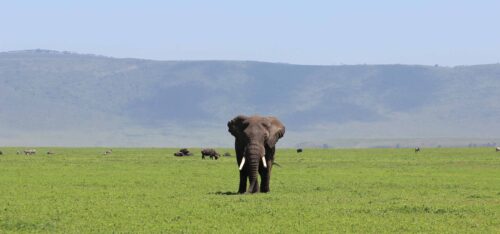
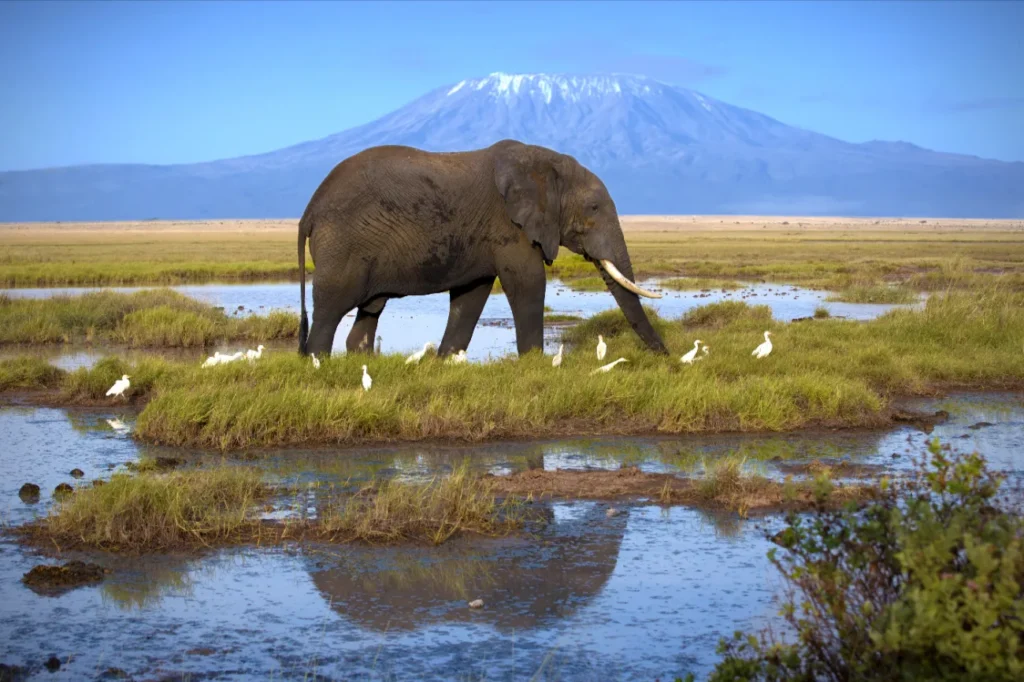
Tracking is done on steep forest trails and is genuinely strenuous, but encounters are close and often prolonged. Red colobus, red-tailed and blue monkey, and yellow baboon share the forest. Elephant, buffalo and leopard occur in the higher and more remote reaches but are very seldom seen. There are no roads anywhere in the park.

Common wild animals

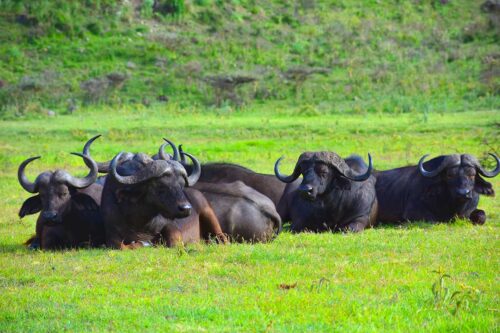
  • African Buffalo

    Occasional

  • Leopard

    Rare

  • African Elephant

    Rare

Birdlife

Birdlife

Around 350 species have been recorded across forest, miombo and lakeshore, including several with a limited range in western Tanzania.

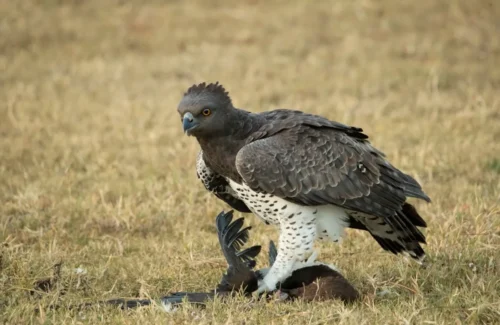
Crested guineafowl, Ross's turaco, palm-nut vulture and fish eagle are all regular, and the lakeshore adds waders and kingfishers. Birding is a pleasant secondary activity rather than the reason to come.

Common bird species

  • African Fish Eagle

    Common

  • African Grey Hornbills

    Occasional

Getting there

How to get there

By Air

Most visitors fly. Scheduled and charter light aircraft reach the Mahale airstrip from Arusha and Dar es Salaam, usually via Kigoma or Katavi, followed by a boat transfer of one to two hours along the lakeshore to the camps.

By Boat

From Kigoma, a chartered boat takes four to six hours, and the MV Liemba lake ferry serves the area on an irregular schedule. There is no road access to the park at all, and no roads inside it.

Weather

Weather and climate in Mahale Mountains

Mahale is warm and humid, moderated considerably by the mass of Lake Tanganyika. Days sit between 27°C and 29°C throughout the year with very little seasonal variation, and nights fall to around 17°C to 20°C at lake level. Mount Nkungwe, rising to 2,462 metres behind the camps, is markedly cooler.

Month by month

High and low temperature and rainfall, shaded by how good the month is for a safari.

  • Jan

    28° / 20°

    150 mm

  • Feb

    28° / 20°

    140 mm

  • Mar

    28° / 20°

    170 mm

  • Apr

    28° / 20°

    150 mm

  • May

    28° / 19°

    60 mm

  • Jun

    27° / 17°

    10 mm

  • Jul

    27° / 16°

    5 mm

  • Aug

    28° / 17°

    5 mm

  • Sep

    29° / 18°

    15 mm

  • Oct

    29° / 19°

    60 mm

  • Nov

    28° / 20°

    140 mm

  • Dec

    28° / 20°

    150 mm

  • Excellent
  • Very good
  • Good
  • Fair
  • Avoid

Rain falls heavily from November through April, peaking around March, and the western slopes of the range catch a great deal of it. Annual rainfall is high, which is why the forest is so dense and the chimpanzees have such abundant fruiting trees.

The dry season from May to October is warm, clear and settled. Forest trails firm up considerably, the lake is at its calmest and clearest for snorkelling, and the chimpanzees tend to range lower down the mountain.

Humidity is the practical consideration rather than heat. Carry at least two litres of water on any trek and expect to be thoroughly wet through by the end.

Light long sleeves help against vegetation and insects on the forest trails.

Best time to go

Best time to visit Mahale Mountains

Best months
May–Oct

Mahale's calendar is unusually clear-cut, and the difference between the seasons is one of effort as much as weather.

May to October is the dry season and the established window for tracking. Trails are firmer and far easier going, and the chimpanzees tend to range lower down the mountain, which can turn a four-hour climb into a one-hour walk.

July to September is the peak within that window, with settled weather, clear lake conditions and the most reliable tracking. It is also the busiest period, though busy at Mahale still means a handful of guests.

November to April brings heavy rain. Trails become slippery and demanding, the chimpanzees often move higher in search of fruiting trees, and several camps close entirely.

The lake is at its clearest for snorkelling through the dry months, a genuine bonus of the same season.

If you are travelling this far, the mid-year window makes the effort and expense far more likely to pay off, since a shorter trek leaves time for the lake as well as the forest in a single day.

Safety

Safety and security

Chimpanzee tracking carries strict rules that exist to protect both you and the animals. Keep the required distance, wear a mask when instructed, and do not visit if you have any infectious illness, since chimpanzees are highly susceptible to human respiratory disease.

The terrain is steep and humid and tracking can last several hours, so a reasonable level of fitness is needed. Mahale is one of the most remote parks in Tanzania, with no road access and no medical facilities nearby. Insurance covering air evacuation is essential.

Health precautions

Malaria prophylaxis is essential in this low-altitude, humid environment. Use repellent and nets consistently.

A yellow fever certificate is commonly required, and typhoid, hepatitis A and B and tetanus vaccinations are recommended. Anyone with a cold, flu or stomach illness should not track chimpanzees on that day, without exception. Lake Tanganyika is considered bilharzia-free near the camps, but confirm locally before swimming.

Things to do

Things to do in Mahale Mountains

  1. Chimpanzee Trekking

    M-Group Forest Trails

    Habituated chimpanzees studied here since the 1960s, tracked on foot.

  2. Lake Tanganyika Snorkelling

    Mahale Shoreline

    Clear water and hundreds of brightly coloured endemic cichlids.

  3. Mount Nkungwe Climb

    Nkungwe Ridge

    A two-day ascent to 2,462 metres through forest and montane grassland.

  4. Dhow and Boat Safaris

    Lakeshore

    Travel between beaches and forest by water, the only way to move here.

  5. Forest Birding

    Lowland Forest · Miombo

    Around 350 species including several western Tanzania specialities.

  6. Beach Time

    Kangwena Beach

    White sand meeting forested mountains directly on the lake.

  7. Kayaking

    Sheltered Bays

    Paddle the shoreline below the Mahale range at first light.

  8. Waterfall Walks

    Forest Streams

    Short guided walks to streams and falls behind the camps.

FAQ

Frequently asked questions

Is chimpanzee tracking at Mahale guaranteed?

Nothing with wild animals is guaranteed, but success rates at Mahale are high because the M-group has been studied continuously since the 1960s and is thoroughly habituated to human observers. Trackers locate the group each morning before guests set out. What varies enormously is the walk itself: chimpanzees may be twenty minutes from camp or several hours up a steep forested slope. Camps typically recommend at least three nights so that one difficult day does not cost you the experience altogether.

How do I get to Mahale Mountains?

There is no road access whatsoever, which is a large part of why the park stays so quiet. Nearly everyone flies by light aircraft from Arusha or Dar es Salaam, usually routed via Kigoma or Katavi, then transfers by boat along the lakeshore for one to two hours to reach the camps. From Kigoma a chartered boat takes four to six hours. The journey is a significant part of the total cost, which is why Mahale is usually combined with Katavi rather than visited alone.

When is the best time to visit Mahale?

May to October, the dry season, is the established window. Forest trails are firmer and easier going, and the chimpanzees tend to range lower down the mountain, which shortens tracking considerably. From November to April the rain is heavy, trails become slippery and demanding, the chimpanzees often move higher, and several camps close for the season entirely. The lake is also at its clearest for snorkelling through the dry months, which is a real bonus of the same window.

Are there rules for tracking chimpanzees?

Strict ones, and they are enforced. You must keep a set distance, wear a mask when instructed, and limit time with the group to one hour. Critically, anyone with a cold, flu or stomach illness must not track that day: chimpanzees share enough of our biology to be highly vulnerable to human respiratory infections, and an ordinary cold can be lethal to them. Children under twelve are generally not permitted, and daily group sizes are deliberately capped.

Can I swim in Lake Tanganyika at Mahale?

Yes, and it is one of the genuine pleasures of the park. The water off the camps is exceptionally clear and holds hundreds of species of brightly coloured cichlid found nowhere else in the world, so snorkelling straight off the beach is properly worthwhile. The lake is considered free of bilharzia in this area and crocodile are not a concern near the camps. Snorkelling gear is provided, and visibility is at its best during the dry season months.

How fit do I need to be?

Reasonably fit, and more so than most safari destinations demand. Tracking involves sustained climbing on steep, root-tangled forest trails in humid air, sometimes for several hours before the group is reached and the same distance back afterwards. There are no vehicles to fall back on. Guides adjust the pace to the group, but anyone with knee problems or limited stamina should discuss it honestly with the camp before booking rather than on arrival.

What else is there to do besides chimpanzee tracking?

Rather more than the park's reputation suggests. Snorkelling and kayaking on Lake Tanganyika fill the afternoons, and the beaches below the camps are genuinely beautiful. Boat safaris along the shoreline are the only way to move between areas, and are rewarding in themselves. Mount Nkungwe can be climbed over two days for those wanting a serious walk, and the forest birding includes several western Tanzania specialities rarely seen elsewhere. The forest birding includes several western Tanzania specialities rarely seen elsewhere in the country.

How many nights should I stay at Mahale?

Three nights is the standard recommendation and the sensible minimum. Given the cost and difficulty of getting there, arriving for a single tracking attempt is a considerable gamble, because a long or unsuccessful trek would define the whole trip. Three nights allows two or three attempts, time on the lake, and a day to recover between climbs. Many itineraries pair Mahale with Katavi, which shares the same flight routing. Many itineraries pair Mahale with Katavi, which shares the same flight routing and makes the long journey west considerably better value.

Explore other destinations

All destinations