Uganda

Mount Elgon

When to visit
January to February and December
Size
1,110 sq km
Temperature
23 'C
Rainfall
60mm
Age requirement
12 Year

Overview

About Mount Elgon

Mount Elgon is an extinct shield volcano straddling the Uganda–Kenya border, with the largest volcanic base of any mountain in the world and a caldera some eight kilometres across at its summit.

The highest point, Wagagai at 4,321 metres, lies on the Ugandan side and is reached without ropes or technical skill, making Elgon one of East Africa’s most approachable high-altitude treks. Standard routes take three to five days through forest, bamboo and open moorland dotted with giant groundsel and lobelia.

Lower down, Sipi Falls on the north-western slopes is a destination in its own right, three waterfalls in sequence with the highest dropping around 100 metres, reachable in a day from Mbale and combined with arabica coffee tours on the surrounding farms.

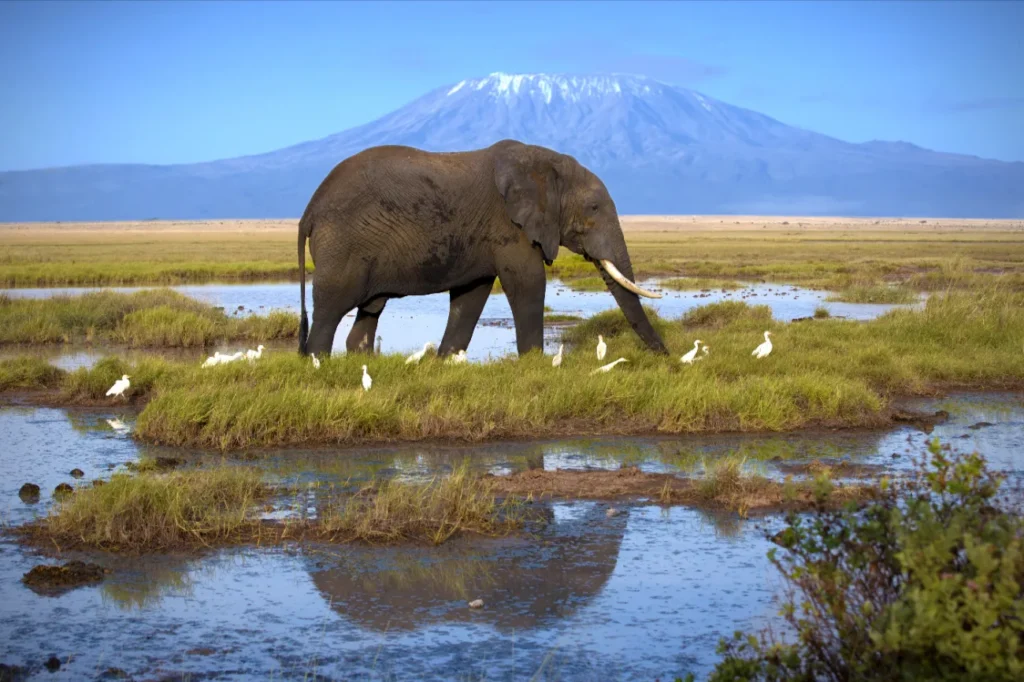
The mountain’s lava tube caves are its other distinction. Elephants walk into Kitum and Makingeny after dark and gouge the walls with their tusks to reach salt deposits, excavating the caves substantially deeper over many centuries.
People and culture

People and culture

The Bagisu farm the fertile southern and western slopes and are known across Uganda for arabica coffee grown at altitude, and for the imbalu circumcision ceremonies held in even-numbered years, which are among the most significant cultural events in eastern Uganda.

The Sabiny occupy the northern side around Kapchorwa, with a distinct language and pastoral traditions. The Sabiny Elders Association has worked for decades to end female genital cutting in the community, a campaign that has drawn national attention.

Coffee tours from Sirimityo and Sipi have become one of the most popular activities on the mountain, taking visitors from picking through to hand-roasting in a single morning, and the smallholder cooperatives that run them keep the revenue local.

The mountain itself carries spiritual significance for both communities, and several caves and springs on its slopes are treated as sacred sites. Guides will explain which areas require particular respect, and it is worth asking rather than assuming.

Wildlife encounters

Wildlife encounters

Mount Elgon is an extinct shield volcano straddling the Uganda–Kenya border, with the largest volcanic base of any mountain in the world and a caldera some eight kilometres across. It is climbed for its landscape rather than its game.

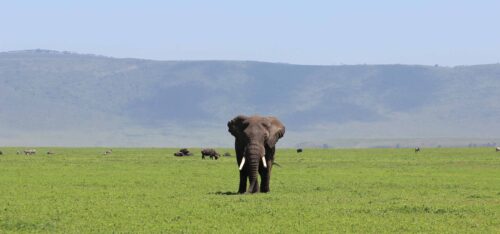
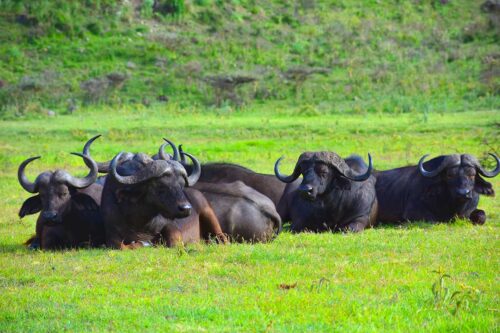
Forest elephant and buffalo use the lower forest, most famously in the Kitum, Makingeny and Chepnyalil caves, where elephants gouge the walls with their tusks to reach salt deposits. Black-and-white colobus, blue monkey, duiker and bushbuck are more commonly seen along the trails.

Common wild animals

  • African Elephant

    Occasional

  • African Buffalo

    Occasional

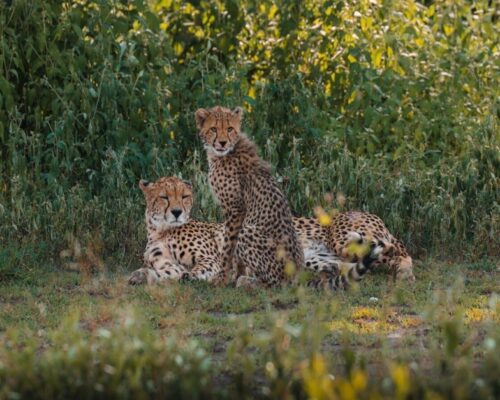
  • Leopard

    Rare

Birdlife

Birdlife

Around 300 species occur across montane forest, bamboo and open moorland, including several restricted to the Kenyan and Ugandan highlands.

Jackson's francolin, the endemic-race Tacazze sunbird, black-collared apalis, moorland francolin and the lammergeier that patrols the caldera rim are the notable ones. Birding is best in the forest belt below 2,500 metres.

Common bird species

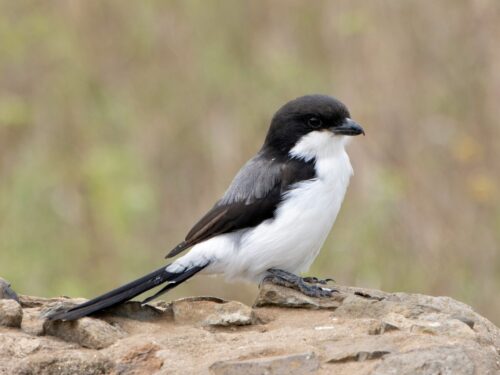
  • Common Fiscal

    Common

  • Bateleur

    Occasional

Getting there

How to get there

By Car

Mbale, the main base on the Ugandan side, lies about 230 kilometres from Kampala, a drive of four to five hours on surfaced road. Trailheads at Budadiri, Kapkwai and Kapchorwa are a further one to two hours.

By Air

There is no scheduled service to the mountain. On the Kenyan side the park is reached from Kitale, about 400 kilometres from Nairobi, with separate park fees and permits.

Weather

Weather and climate in Mount Elgon

Altitude governs everything on Elgon, from around 1,200 metres at the base to 4,321 metres at Wagagai. Days at the trailheads reach 22°C to 25°C and nights there fall to around 11°C, while nights near the summit drop below freezing and frost is routine on the caldera rim.

Month by month

High and low temperature and rainfall, shaded by how good the month is for a safari.

  • Jan

    25° / 11°

    50 mm

  • Feb

    26° / 11°

    60 mm

  • Mar

    25° / 12°

    120 mm

  • Apr

    24° / 12°

    200 mm

  • May

    23° / 12°

    190 mm

  • Jun

    23° / 11°

    120 mm

  • Jul

    22° / 11°

    140 mm

  • Aug

    23° / 11°

    150 mm

  • Sep

    24° / 11°

    130 mm

  • Oct

    24° / 11°

    120 mm

  • Nov

    24° / 11°

    90 mm

  • Dec

    25° / 11°

    60 mm

  • Excellent
  • Very good
  • Good
  • Fair
  • Avoid

Rain falls in most months, which surprises visitors who expect a clear dry season. The heaviest periods run from March to May and again from August to October, and the mountain generates a great deal of its own weather, with cloud building over the ridges through the morning.

The drier windows of December to February and June to July offer the most reliable trekking, with firmer trails, simpler river crossings and a far better chance of clear views from the rim.

Hypothermia rather than altitude sickness is the most common problem here. Carry proper cold-weather gear including a warm sleeping bag, waterproofs, gloves and a hat regardless of conditions at the trailhead.

Book huts and porters through the Uganda Wildlife Authority in Mbale before travelling.

Best time to go

Best time to visit Mount Elgon

Best months
Jan–Feb, Sep–Dec

Elgon has two quite separate calendars depending on whether you intend to climb it or simply visit Sipi Falls.

December to February and June to July are the drier windows and much the best periods for a summit attempt. Trails are firmer, river crossings simpler, and views from the caldera rim across to Kenya far more likely to be clear. Book huts and porters through the Uganda Wildlife Authority in Mbale ahead of travelling.

March to May and August to October bring heavy rain, and the trails turn to deep mud that makes multi-day ascents considerably harder work.

Sipi Falls follows the opposite logic. The falls are at their most spectacular during the wet months, when volume is highest, so a short trip built around the falls and coffee tours has a different calendar entirely.

February and June offer the best compromise between climbable trails and waterfalls still running strongly.

If you want both the summit and the falls at their best, the shoulder months offer the only real compromise, and even then the mountain will make its own weather regardless of the forecast.

Safety

Safety and security

This is a non-technical climb, but altitude is a genuine risk and the summit is high enough for acute mountain sickness. Ascend gradually, allow an acclimatisation day and descend if symptoms worsen.

Nights near the top drop below freezing and hypothermia is the most common problem on the mountain. Carry proper cold-weather gear regardless of how warm Mbale felt. Guides are compulsory, trails can be indistinct in mist, and the caves are slippery.

Health precautions

Prophylaxis is advised for the malarial lower slopes even though the risk falls away with height. Uganda requires proof of yellow fever vaccination on entry.

Reasonable fitness is essential: the standard routes to Wagagai take three to five days with sustained walking at altitude. Carry a personal first aid kit, blister treatment and any prescription medication. The nearest hospital is at Mbale.

Things to do

Things to do in Mount Elgon

  1. Wagagai Summit Trek

    Sasa · Sipi · Piswa Trails

    A non-technical three to five day climb to 4,321 metres.

  2. Sipi Falls

    Sipi, North-West Slopes

    Three waterfalls in sequence, the highest dropping about 100 metres.

  3. Kitum Cave

    Eastern Slopes

    Elephants enter the cave at night to mine salt from the walls.

  4. Arabica Coffee Tour

    Sirimityo · Sipi

    From picking to roasting on the slopes where the beans grow.

  5. Caldera Rim Walk

    Summit Plateau

    One of the largest intact calderas in the world, eight kilometres across.

  6. Forest Birding

    Kapkwai · Forest Exploration Centre

    Around 300 species, including highland specialities.

FAQ

Frequently asked questions

How hard is it to climb Mount Elgon?

It is a walk rather than a climb, requiring no ropes or technical skill, but it is a serious multi-day trek. Standard routes to the Wagagai summit at 4,321 metres take three to five days with sustained walking at altitude, and acute mountain sickness is a genuine possibility. Guides are compulsory. Anyone reasonably fit who paces the ascent and allows time to acclimatise can complete it comfortably. Porters and equipment are arranged through the Uganda Wildlife Authority office at Mbale.

What are the elephant caves?

Kitum, Makingeny and Chepnyalil are lava tube caves on the mountain's slopes where elephants walk in after dark and gouge the walls with their tusks to reach salt deposits in the rock. Over many centuries this has excavated the caves substantially deeper. Kitum is the best known and extends around 200 metres into the hillside. Sightings of elephants actually inside are rare, but the tusk marks are unmistakable. Kitum lies on the Kenyan side of the mountain.

Can I visit Sipi Falls without climbing the mountain?

Yes, and many visitors do exactly that. Sipi sits on the north-western slopes near Kapchorwa, is reached by road in about an hour from Mbale, and consists of three falls in sequence with the highest dropping around 100 metres. A day there combines the falls with an arabica coffee tour, abseiling and village walks, making it a straightforward two-night trip from Kampala with no trekking involved. Several lodges on the escarpment have direct views of the main fall.

When is the best time to trek Mount Elgon?

December to February and June to July are the drier windows and much the best periods for a summit attempt, with firmer trails, easier river crossings and a far better chance of clear views from the caldera rim. March to May and August to October bring heavy rain and deep mud that makes multi-day ascents considerably harder, though Sipi Falls itself is at its most dramatic then. Book huts and porters through the Uganda Wildlife Authority in Mbale before travelling.

Which route should I take to the summit?

Three main routes serve the Ugandan side. The Sasa trail from Budadiri is the shortest and steepest, gaining height fast and making acclimatisation harder. The Piswa route from Kapchorwa is gentler and passes through the finest bamboo and moorland scenery, taking longer overall. The Sipi trail also starts from the north-west and combines well with a visit to the falls. Most operators recommend ascending by one route and descending by another.

How does Elgon compare with Kilimanjaro?

Elgon is lower at 4,321 metres against Kilimanjaro's 5,895, considerably cheaper, and far quieter, with a handful of groups on the mountain at any time rather than hundreds. The scenery is different in character: a vast caldera and moorland rather than glaciers and a volcanic cone. Success rates are higher because the altitude is more forgiving. It suits trekkers who want a genuine multi-day mountain experience without the cost and crowds.

What wildlife lives on Mount Elgon?

Forest elephant and buffalo use the lower forest, most famously in the salt caves, though sightings are uncommon. Black-and-white colobus, blue monkey, duiker and bushbuck are seen more regularly along the trails. Around 300 bird species occur across forest, bamboo and moorland, including Jackson's francolin, black-collared apalis and the lammergeier that patrols the caldera rim. Birding is best in the forest belt below 2,500 metres. Birding is best in the forest belt below 2,500 metres, where the endemic-race sunbirds and forest robins are most active.

Is Mount Elgon in Uganda or Kenya?

Both. The mountain straddles the border, and each country manages its own national park with separate fees, permits and access points. Wagagai, the true summit at 4,321 metres, lies on the Ugandan side and is usually climbed from Mbale, Budadiri or Kapchorwa. The Kenyan side is reached from Kitale and includes the Kitum elephant caves. Crossing between the two on foot is not permitted, so decide which side your itinerary covers before booking.

Explore other destinations

All destinations