
Kenya

Samburu National Reserve

When to visit
January to February, June to October and December
Size
165 sq km
Temperature
33 'C
Rainfall
10mm
Age requirement
12 Year

Overview

About Samburu National Reserve

Samburu National Reserve covers 165 square kilometres of semi-arid country in northern Kenya, along the southern bank of the Ewaso Ng’iro River.

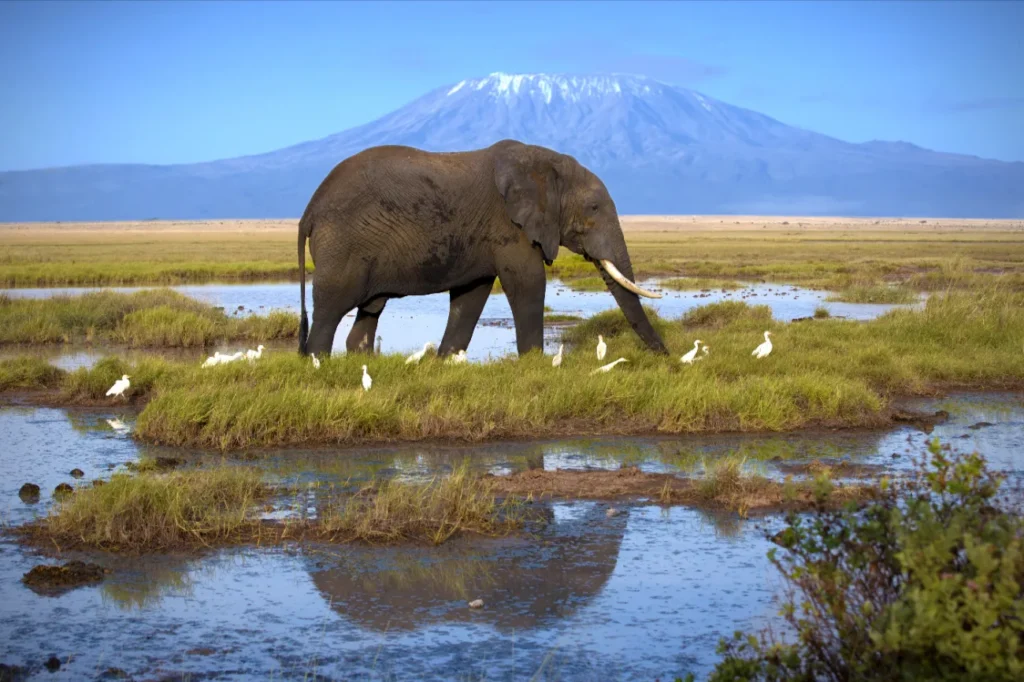
The river is everything here. It flows through country that would otherwise be near-desert, drawing elephant, buffalo and predators to its doum palm-lined banks, and its riverine forest is a green thread through an ochre landscape.

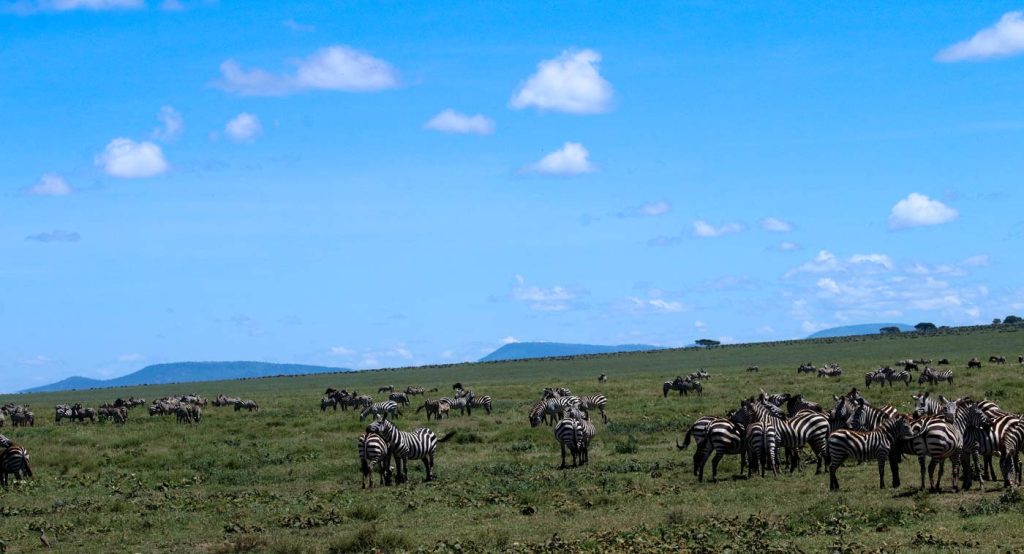
Samburu’s speciality is the Special Five, a set of dry-country species found here and almost nowhere else on the Kenyan safari circuit: Grevy’s zebra, reticulated giraffe, Beisa oryx, gerenuk and the blue-necked Somali ostrich.

Together with the adjoining Buffalo Springs and Shaba reserves it forms a larger ecosystem, and the area’s rugged hills and open scrub give it a starkly different character from the green highlands and the Maasai Mara.
People and culture

People and culture

The Samburu are close relatives of the Maasai, sharing a Maa language and a pastoral cattle-keeping culture, though with distinct dress, ornamentation and ceremonial practice.

Their name for themselves is Lokop or Loikop, and Samburu warriors are noted for elaborate beadwork and ochre-dressed hair. Cattle, goats and camels are central to livelihood in country too dry for reliable cultivation.

Community conservancies across northern Kenya, several of them Samburu-owned and managed through the Northern Rangelands Trust, have become an internationally cited model for community-led conservation and now cover far more land than the reserves themselves.

Cultural visits are widely available and best arranged through conservancy lodges, where the arrangements are longer-standing and the fees more reliably reach the households involved.

Getting there

How to get there

Weather

Weather and climate in Samburu National Reserve

Samburu is hot and semi-arid, sitting at around 800 to 1,200 metres in northern Kenya. Days regularly run between 29°C and 35°C, among the hottest of any Kenyan reserve, and nights fall to 20°C to 23°C.

Month by month

High and low temperature and rainfall, shaded by how good the month is for a safari.

  • Jan

    34° / 22°

    20 mm

  • Feb

    35° / 22°

    15 mm

  • Mar

    35° / 23°

    50 mm

  • Apr

    32° / 23°

    110 mm

  • May

    31° / 22°

    60 mm

  • Jun

    30° / 20°

    10 mm

  • Jul

    29° / 20°

    10 mm

  • Aug

    30° / 20°

    10 mm

  • Sep

    32° / 21°

    10 mm

  • Oct

    33° / 22°

    45 mm

  • Nov

    31° / 21°

    120 mm

  • Dec

    32° / 21°

    50 mm

  • Excellent
  • Very good
  • Good
  • Fair
  • Avoid

Rain falls in two short seasons, the long rains from March to May and short rains through November, but totals are low at roughly 350 millimetres a year and highly unreliable. Drought is a recurring feature of this landscape rather than an exception.

The Ewaso Ng'iro River is what makes the reserve viable. Rising in the Aberdares and Mount Kenya, it carries highland water through country that receives very little of its own, and game concentrates along it year-round.

Heat is the practical consideration. Game drives run early and late with a long break through the middle of the day, and sun protection, a hat and considerably more water than you expect to need are all essential.

Drives run early and late with a long break through the middle of the day, when the heat is fierce and most animals have moved into whatever shade they can find.

Best time to go

Best time to visit Samburu National Reserve

Best months
Jan–Mar, May–Dec

Samburu is a dry-country reserve, and its game concentrates on the river regardless of season, which makes it less starkly seasonal than parks depending on rainfall.

June to October is the main dry window and the strongest for game viewing, when the surrounding country is at its most parched and animals rely entirely on the Ewaso Ng'iro. Sightings along the river are consistently good.

December to February is hot and dry, with similar concentrations of game and excellent light for photography. These are among the hottest months, regularly above 33°C.

March to May and November bring the rains, when the scrub greens briefly, game disperses and the river can flood. Birding peaks and rates fall, but the reserve is at its least reliable for the Special Five.

Whichever month, drive early. By mid-morning the heat is fierce and most animals have moved into whatever shade they can find until late afternoon.

Whichever month you visit, drive early. By mid-morning the heat is severe, game has settled into shade and the light has gone flat, so the first hours after dawn are worth more than the rest of the day.

Things to do

Things to do in Samburu National Reserve

  1. Special Five Game Drives

    Ewaso Ng'Iro Riverbanks

    Grevy's zebra, reticulated giraffe, oryx, gerenuk and Somali ostrich.

  2. Ewaso Ng'iro River

    Riverine Forest

    Doum palms and a green thread of forest through near-desert country.

  3. Elephant Viewing

    River Crossings

    Large herds coming down to drink, studied here for decades.

  4. Leopard Tracking

    Riverine Thicket

    One of Kenya's more reliable reserves for leopard sightings.

  5. Samburu Cultural Visit

    Community Conservancies

    Maa-speaking pastoralists with distinctive beadwork and ceremony.

  6. Birdwatching

    River · Scrub

    Over 450 species including dry-country specials found nowhere else.

FAQ

Frequently asked questions

What are the Samburu Special Five?

They are five dry-country species found in northern Kenya and almost nowhere else on the standard safari circuit: Grevy's zebra, distinguished by narrow stripes and large rounded ears; reticulated giraffe, with sharply defined polygonal markings; Beisa oryx; gerenuk, the long-necked antelope that browses standing on its hind legs; and the blue-necked Somali ostrich. Seeing all five is a common goal for visitors here. Conservancies bordering the reserve permit walking and night drives that the national reserve itself does not.

How is Samburu different from the Maasai Mara?

Almost entirely. Samburu is hot, semi-arid and rugged, with game concentrated along a single river through near-desert country, while the Mara is green rolling grassland with far higher densities and the migration. Samburu is smaller, quieter and holds species the Mara does not. Many Kenyan itineraries pair the two deliberately, since they offer such different landscapes and wildlife. Drives run early and late, with a long break through the fierce heat of the middle of the day.

Is Samburu good for leopard?

It is one of the more reliable reserves in Kenya for leopard, largely because the riverine thicket along the Ewaso Ng'iro concentrates them into a narrow band that guides know well. Sightings are never guaranteed with a nocturnal and secretive animal, but the odds here are better than in most Kenyan parks. Early morning and late afternoon drives along the river offer the best chance. Samburu pairs naturally with Ol Pejeta, Lewa and Mount Kenya on a northern Kenya circuit.

How hot does it get?

Hot enough to shape the whole day. Samburu regularly exceeds 33°C and can push beyond 35°C in January and February, with nights staying above 20°C. Game drives therefore run early and late, with a long break through the middle of the day. Sun protection, a hat and far more water than you think necessary are all genuinely important here. Conservancies bordering the reserve permit walking and night drives that the national reserve itself does not.

How do I get to Samburu?

By road it is roughly 350 kilometres north of Nairobi, five to six hours via Nanyuki and Isiolo, with the last stretch rough. Scheduled light aircraft serve the reserve's airstrips from Wilson Airport in about an hour, which is how most visitors arrive. Samburu combines well by road with Mount Kenya, Ol Pejeta and Lewa on a northern Kenya circuit. Drives run early and late, with a long break through the fierce heat of the middle of the day.

What is the Ewaso Ng'iro River?

It is the river that makes Samburu possible, rising in the Aberdares and on Mount Kenya and carrying highland water north through country that receives very little rainfall of its own. Its banks support doum palms and riverine forest, and virtually all the reserve's game depends on it. In severe drought years it can reduce to pools, which concentrates wildlife dramatically. Samburu pairs naturally with Ol Pejeta, Lewa and Mount Kenya on a northern Kenya circuit.

Can I combine Samburu with community conservancies?

Yes, and it is increasingly the way this region is visited. Samburu-owned conservancies managed through the Northern Rangelands Trust surround the reserves and now cover far more land, offering walking, night drives and camel treks that the national reserves do not permit. Staying in a conservancy also channels revenue directly to the communities who own the land. Conservancies bordering the reserve permit walking and night drives that the national reserve itself does not.

When is the best time to visit?

June to October is the main dry window and the strongest for game viewing, when the surrounding country is parched and animals depend entirely on the river. December to February is hot and dry with similar concentrations and excellent photographic light. March to May and November bring the rains, when game disperses, the river can flood and the Special Five become harder to find. Drives run early and late, with a long break through the fierce heat of the middle of the day.

Explore other destinations

All destinations