
Kenya

Shimba Hills National Park

When to visit
January to February, July to October and December
Size
300 sq km
Temperature
28 'C
Rainfall
25mm

Overview

About Shimba Hills National Park

Shimba Hills National Reserve covers 300 square kilometres of coastal rainforest and rolling grassland about 30 kilometres inland from Diani Beach on Kenya’s south coast.

It is the only place in Kenya where sable antelope occur, and the reserve was established largely to protect them. The population is small and closely monitored, and sightings take patience but are the reserve’s principal draw.

The hills rise to around 450 metres and catch enough moisture off the Indian Ocean to support one of the largest remaining stands of coastal rainforest in East Africa, which holds plants and butterflies found nowhere else.

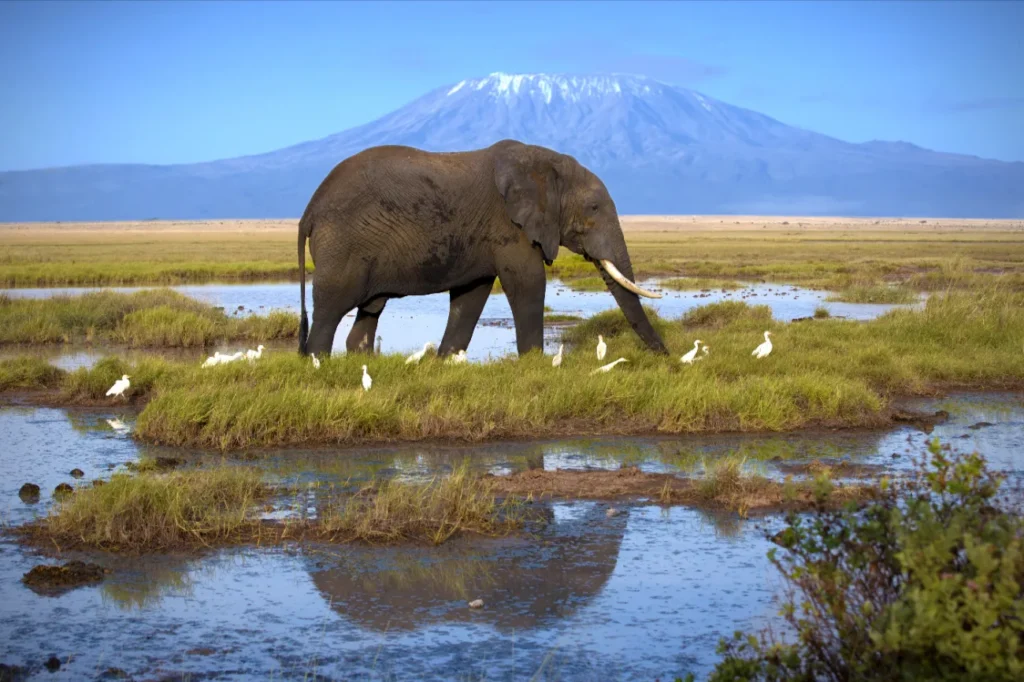
Sheldrick Falls, reached on a guided walk down through forest, and the elephant population that moves between the reserve and the adjoining Mwaluganje sanctuary make Shimba a genuine half-day or overnight alternative to lying on the beach.
People and culture

People and culture

The Digo, part of the wider Mijikenda group, are the people of these hills and the coast below, and their sacred kaya forests, several UNESCO listed, are protected groves maintained by community elders.

Mwaluganje Elephant Sanctuary, adjoining the reserve, was established on community land specifically to protect an elephant migration corridor, with landowners receiving a share of revenue in exchange for keeping the route open.

Human-elephant conflict has been a persistent issue in this densely settled area, and the corridor arrangement was a direct response to crop raiding that had brought communities and wildlife into repeated confrontation.

The reserve is close enough to the coast that most visitors come as a day trip from Diani, and local guides from the surrounding villages lead the walks to Sheldrick Falls and through the forest.

Getting there

How to get there

Weather

Weather and climate in Shimba Hills National Park

Shimba Hills rises to around 450 metres, high enough to be noticeably cooler and wetter than the coast below. Days reach 26°C to 32°C and nights fall to 17°C to 21°C, with humidity high year-round.

Month by month

High and low temperature and rainfall, shaded by how good the month is for a safari.

  • Jan

    31° / 20°

    40 mm

  • Feb

    32° / 20°

    30 mm

  • Mar

    32° / 21°

    80 mm

  • Apr

    29° / 21°

    230 mm

  • May

    28° / 20°

    250 mm

  • Jun

    27° / 18°

    80 mm

  • Jul

    26° / 17°

    60 mm

  • Aug

    26° / 17°

    50 mm

  • Sep

    28° / 18°

    50 mm

  • Oct

    29° / 19°

    70 mm

  • Nov

    30° / 20°

    110 mm

  • Dec

    31° / 20°

    70 mm

  • Excellent
  • Very good
  • Good
  • Fair
  • Avoid

The long rains fall from April into early June, and May is the wettest month on this coast, often exceeding 250 millimetres. Short rains arrive in November. Annual rainfall is around 1,200 millimetres, considerably more than the beaches below.

That extra moisture sustains the coastal rainforest, and mist drifting through the trees is common in the early morning, particularly during and after the wet seasons, when the canopy holds water long after the rain itself has stopped falling.

June to October is drier and considerably more comfortable, with the kusi monsoon cooling the air. Forest paths become slippery after rain, so proper footwear matters for the walk down to Sheldrick Falls.

That extra moisture sustains the coastal rainforest, and mist drifting through the trees is common in the early morning, particularly during and after the wet seasons, when the canopy holds water long after the rain itself has stopped falling.

Best time to go

Best time to visit Shimba Hills National Park

Best months
Jan–Mar, Jun–Dec

Shimba works year-round as a half-day trip from the coast, and the seasons affect comfort and forest walking more than wildlife.

June to October is the driest and most comfortable window, with lower humidity, firmer forest paths for the Sheldrick Falls walk and better visibility across the grassland where sable are found.

December to March is hot and humid but largely dry, and works well, coinciding with the main beach season on the coast below.

April and May bring the long rains, when forest paths become slippery and the falls walk is hard going, though the forest is at its most atmospheric and the falls at their fullest.

Sable antelope are present year-round but are shy and favour the open grassland, so early morning gives much the best chance in any season. Elephant movement between the reserve and Mwaluganje follows water rather than a fixed calendar.

Sable antelope are present year-round but are shy and favour the open grassland, so early morning gives much the best chance in any season. Elephant movement between the reserve and Mwaluganje follows water rather than any fixed calendar.

Things to do

Things to do in Shimba Hills National Park

  1. Sable Antelope

    Open Grassland

    The only place in Kenya where sable antelope occur.

  2. Sheldrick Falls

    Forest Trail

    A guided walk down through rainforest to a 25-metre waterfall.

  3. Coastal Rainforest

    Shimba Ridges

    One of the largest remaining stands of coastal forest in East Africa.

  4. Mwaluganje Sanctuary

    Adjoining Reserve

    A community elephant sanctuary protecting a migration corridor.

  5. Elephant Viewing

    Reserve · Corridor

    Herds moving between the reserve and the community sanctuary.

  6. Butterfly and Plant Life

    Forest Blocks

    Species found nowhere else, in a forest of exceptional endemism.

FAQ

Frequently asked questions

What is Shimba Hills known for?

Sable antelope, which occur nowhere else in Kenya, and the reserve was established largely to protect them. Beyond that it holds one of the largest remaining stands of coastal rainforest in East Africa, with plants and butterflies found nowhere else, along with elephant, Sheldrick Falls and a cooler climate than the beaches 30 kilometres below. The reserve sits about an hour inland from Diani, which makes it an easy half day from the south coast.

Can I visit Shimba as a day trip from Diani?

Yes, and that is how most people do it. The reserve is about 30 kilometres inland, roughly an hour by road from Diani, and a morning covers the main game-viewing loop and the walk to Sheldrick Falls comfortably. Staying overnight at the lodge inside the reserve gives a better chance of elephant and sable at dawn. A ranger accompanies the Sheldrick Falls walk, as elephant and buffalo are present throughout the forest.

Will I see sable antelope?

Sightings take patience. The population is small, closely monitored and favours open grassland, and the animals are shy. Early morning offers much the best chance, when they come out to graze before retreating into cover. A guide who knows their current range makes a considerable difference. Treat a sighting as the reward for effort rather than an expectation. There is a lodge inside the reserve for anyone wanting a dawn start rather than driving up from the coast.

What is the walk to Sheldrick Falls like?

It descends through coastal rainforest to a waterfall of around 25 metres with a pool at the base where you can swim, taking roughly two hours return at an unhurried pace. A ranger accompanies every group, as elephant and buffalo are present in the forest. The path is steep in places and becomes slippery after rain, so proper footwear matters. The reserve sits about an hour inland from Diani, which makes it an easy half day from the south coast.

What is Mwaluganje?

It is an elephant sanctuary adjoining the reserve, established on community land specifically to protect a migration corridor that elephants use between Shimba Hills and the wider ecosystem. Landowners receive a share of revenue in exchange for keeping the route open, which was a direct response to crop raiding that had brought people and elephants into repeated conflict. A ranger accompanies the Sheldrick Falls walk, as elephant and buffalo are present throughout the forest.

How do I get to Shimba Hills?

The main gate at Kwale is about 30 kilometres inland from Diani, roughly an hour by road, and around 55 kilometres from Mombasa via the Likoni ferry. Most visitors come from the south coast beaches. There is a lodge inside the reserve for those wanting to stay, and the road up from the coast is surfaced most of the way. There is a lodge inside the reserve for anyone wanting a dawn start rather than driving up from the coast.

Is it worth leaving the beach for?

For a half day, yes. Shimba offers something genuinely different from the coast: rainforest, a waterfall walk, elephant and an antelope found nowhere else in the country, all within an hour of Diani. It is not a substitute for a proper safari in the Mara or Tsavo, but as a break from the beach it is far better than most coastal excursions. The reserve sits about an hour inland from Diani, which makes it an easy half day from the south coast.

When is the best time to visit?

June to October is the driest and most comfortable window, with lower humidity, firmer forest paths and better visibility across the grassland where sable are found. December to March is hot and humid but largely dry. April and May bring the long rains, when forest paths become slippery and the falls walk is hard going, though the waterfall is at its fullest. A ranger accompanies the Sheldrick Falls walk, as elephant and buffalo are present throughout the forest.

Explore other destinations

All destinations