Tanzania

Udzungwa Mountains National Park

When to visit
June to September
Size
1,990 sq km
Temperature
27 'C
Rainfall
20mm
Age requirement
12 Year

Overview

About Udzungwa Mountains National Park

Udzungwa Mountains National Park protects one of the most biologically significant rainforests in Africa, a roadless range of waterfalls, endemic primates and steep forest trails covering 1,990 square kilometres in south-central Tanzania.

It forms part of the Eastern Arc Mountains, an ancient chain sometimes called the Galápagos of Africa because their forests have persisted, unbroken and continuously moist, for tens of millions of years. That continuity has produced an extraordinary concentration of species found nowhere else on earth.

Two primates are unique to these forests. The Iringa red colobus and the Sanje mangabey, the latter unknown to science until 1979, are both confined to the range, as is the Udzungwa forest partridge described only in 1991. New species are still being catalogued here.

There are no game-viewing roads. Everything is done on foot, from an easy hour along the lower trails to the demanding climb to the 170-metre Sanje Waterfalls or a multi-day trek to Mwanihana Peak. The park sits about an hour beyond Mikumi, and the two combine into an unusually varied southern itinerary.
People and culture

People and culture

The Hehe and Bena peoples farm the foothills and the Kilombero valley below the escarpment, growing rice, maize and sugar on some of the most productive land in Tanzania. The valley is among the largest freshwater wetlands in East Africa and supports a dense rural population.

Mang'ula, the village at the park headquarters, grew up around the TAZARA railway line built in the 1970s, and the station still shapes the rhythm of the settlement. Most visitors base themselves here, and the guesthouses and small lodges are locally owned.

Local guides trained through the park's community programmes lead every trail, and guiding is a significant source of employment in the surrounding villages. Fees paid at the gate are a meaningful part of the local economy, which matters given the pressure that farming exerts on the forest edge.

Village walks and visits to the Kilombero rice fields are easily arranged through the park office or your accommodation, and offer useful context for understanding the tension between conservation and cultivation that defines the boundary of every Eastern Arc forest.

Wildlife encounters

Wildlife encounters

Udzungwa is a park for forest, not for big game, and it is one of the most biologically significant places in Africa. Part of the Eastern Arc Mountains, sometimes called the Galápagos of Africa, it holds an extraordinary concentration of endemic species.

Two primates found nowhere else are the draw: the Iringa red colobus and the Sanje mangabey, the latter unknown to science until 1979. Angola colobus, blue monkey and yellow baboon are all common along the trails. Elephant, buffalo and leopard live in the forest but are rarely encountered on foot.

Common wild animals

  • African Elephant

    Rare

  • African Buffalo

    Occasional

  • Leopard

    Rare

Birdlife

Birdlife

Around 400 bird species have been recorded, including several Eastern Arc endemics that draw birders specifically to these forests.

The Udzungwa forest partridge, discovered in 1991 and found nowhere else, is the celebrated one. Rufous-winged sunbird, green-headed oriole, silvery-cheeked hornbill and a range of greenbuls and forest robins reward patient walking.

Common bird species

  • African Grey Hornbills

    Common

  • Bateleur

    Occasional

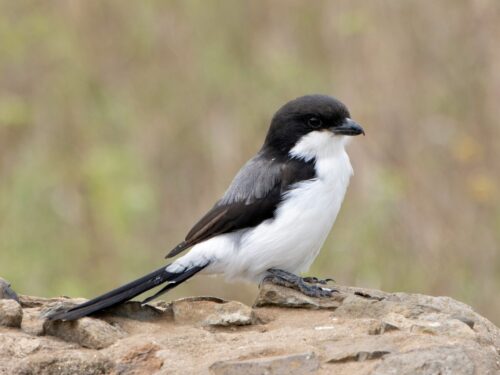
  • Common Fiscal

    Common

Getting there

How to get there

By Car

The park headquarters at Mang'ula lie roughly 350 kilometres from Dar es Salaam, a drive of five to six hours, and about 65 kilometres beyond Mikumi. The road is surfaced almost the whole way, which makes Udzungwa easy to combine with Mikumi.

By Rail

The TAZARA railway from Dar es Salaam stops at Mang'ula, an unusual and inexpensive way to arrive, though timetables are unreliable. There is no airstrip at the park itself.

Weather

Weather and climate in Udzungwa Mountains National Park

Udzungwa is cooler and far wetter than the surrounding lowlands, with altitudes ranging from around 250 metres at the base to 2,576 metres at Luhomero. Days at the trailheads sit between 25°C and 29°C, dropping sharply with height, and nights near the base fall to 15°C to 19°C.

Month by month

High and low temperature and rainfall, shaded by how good the month is for a safari.

  • Jan

    29° / 19°

    180 mm

  • Feb

    29° / 19°

    160 mm

  • Mar

    28° / 19°

    220 mm

  • Apr

    27° / 19°

    260 mm

  • May

    27° / 18°

    110 mm

  • Jun

    26° / 16°

    30 mm

  • Jul

    25° / 15°

    20 mm

  • Aug

    26° / 15°

    20 mm

  • Sep

    28° / 16°

    25 mm

  • Oct

    29° / 18°

    60 mm

  • Nov

    29° / 19°

    150 mm

  • Dec

    29° / 19°

    180 mm

  • Excellent
  • Very good
  • Good
  • Fair
  • Avoid

Rain falls through much of the year, which is what sustains the forest. The heaviest period runs from March to May, peaking in April at around 260 millimetres, and a second wet spell falls in November and December. Annual rainfall exceeds 1,800 millimetres on the escarpment.

The dry season from June to October brings firmer trails, easier river crossings and markedly less leech activity, along with clearer views from the higher ground. September is typically the driest month.

This is a hiking climate rather than a safari one. Proper boots with ankle support are not optional in any season, and a waterproof is worth carrying even in the dry months.

Gaiters are worth packing in the wet months, when leech activity on the forest trails rises considerably.

Best time to go

Best time to visit Udzungwa Mountains National Park

Best months
Jun–Oct

Udzungwa is a walking park, so the calendar is driven by trail conditions rather than by wildlife movement.

June to October is the dry season and much the best period. Trails are firmer underfoot, river crossings on the Sanje route are straightforward, leeches are far less active, and views open up across the Kilombero valley. September is usually the most reliable month.

November to May is wet, and Udzungwa is wet even by rainforest standards. Paths turn slippery, steeper routes become considerably harder, and the falls are often shrouded in cloud and spray.

April is the wettest month and the one to plan around for any multi-day route, though day walks on the lower trails remain feasible.

Birders often favour the shoulder months, when breeding activity peaks and the Eastern Arc endemics are most vocal.

Whichever month you choose, start walks early. Cloud builds over the escarpment through the morning, the forest is cooler and the primates considerably more active in the first hours of light, and afternoon rain is common even in the dry season.

Safety

Safety and security

This is a hiking park, and the hazards are those of forest walking rather than game viewing. Trails are steep, rocky and slippery when wet, and the Sanje Falls route in particular involves exposed sections. Proper boots are not optional.

All hiking is done with a park guide, which is compulsory and sensible. Carry more water than you expect to need, start early to avoid afternoon rain, and be aware that elephant and buffalo do occur in the forest even though sightings are rare. Leeches are common in the wet season and harmless.

Health precautions

The lowland approach is a malaria zone, so prophylaxis is advised even though transmission drops with altitude. Use repellent, particularly around Mang'ula.

Consult a travel clinic regarding yellow fever, typhoid, hepatitis A and B and tetanus. A reasonable level of fitness matters more here than at most parks: the Sanje Falls walk is a demanding half day and the Mwanihana route is a serious multi-day trek. The nearest hospital of any size is at Ifakara.

Things to do

Things to do in Udzungwa Mountains National Park

  1. Sanje Waterfalls Hike

    Sanje Trail

    A demanding half-day climb to a 170-metre fall with a swimming pool.

  2. Primate Watching

    Mang'Ula · Sanje

    Iringa red colobus and Sanje mangabey occur nowhere else on earth.

  3. Mwanihana Peak Trek

    Mwanihana Trail

    A serious two to three day climb through forest to open ridge.

  4. Prince Bernhard Falls

    Short Trail

    A gentle walk suited to a half day or a first afternoon.

  5. Forest Birding

    Lowland Forest

    Around 400 species, including Eastern Arc endemics.

  6. Njokamoni Waterfall

    Njokamoni Trail

    A shorter forest walk to a quiet fall and pool.

  7. Butterfly and Endemic Flora

    Escarpment Slopes

    Exceptional endemism across plants, amphibians and invertebrates.

  8. Kilombero Valley Villages

    Mang'Ula Foothills

    Rice farming and community life below the escarpment.

FAQ

Frequently asked questions

What is Udzungwa best known for?

Endemism above all. Udzungwa forms part of the Eastern Arc Mountains, an ancient chain sometimes called the Galápagos of Africa for the number of species found nowhere else on earth. Two primates are unique to these forests: the Iringa red colobus and the Sanje mangabey, which was unknown to science until 1979. The Udzungwa forest partridge, described in 1991, is similarly confined to the range, and new species continue to be catalogued here by researchers working the escarpment.

Can I do a game drive at Udzungwa?

No, and that is deliberate rather than a shortcoming. There are no game-viewing roads inside the park at all, and everything is done on foot along a network of trails ranging from an easy hour to multi-day treks. Visitors come for forest walking, waterfalls, primates and birds rather than big game from a vehicle. The park pairs particularly well with Mikumi an hour away if you want a conventional safari alongside the hiking.

How difficult is the Sanje Waterfalls hike?

It is a demanding half day rather than a stroll. The route climbs steeply through forest to a 170-metre waterfall with a plunge pool at the base where you can swim, and takes roughly four to five hours return at a moderate pace. Proper walking boots matter, especially in the wet season when the rock becomes slippery. Start early, carry at least two litres of water, and allow longer if you intend to swim. A park guide is compulsory on every trail.

When is the best time to visit Udzungwa?

June to October, the dry season, is much the best period for walking. Trails are firmer underfoot, river crossings are straightforward, leeches are far less active and views from the escarpment are clear. The wet months from November to May make the steeper routes hard work and often shroud the falls in cloud, though the forest is at its most dramatic and birders find the breeding activity genuinely rewarding. Expect at least some rain whenever you visit.

How do I get to Udzungwa Mountains National Park?

The park headquarters at Mang'ula lie about 350 kilometres from Dar es Salaam, a drive of five to six hours on largely surfaced road, and roughly 65 kilometres beyond Mikumi. That proximity makes the two easy to combine into a single southern trip. The TAZARA railway from Dar es Salaam also stops at Mang'ula, which is inexpensive and a memorable journey, though timetables are unreliable. There is no airstrip serving the park directly.

Do I need to be fit to visit?

For the shorter trails, no. The Prince Bernhard Falls walk and the lower forest circuits are gentle enough for most visitors and take an hour or two. The Sanje route is a genuine half-day climb requiring reasonable fitness, and the Mwanihana Peak trek is a serious two to three day expedition with camping at altitude. The park caters to a wide range, so choose the trail honestly rather than by ambition.

What primates will I actually see?

Angolan black-and-white colobus, blue monkey and yellow baboon are all common along the lower trails and are seen on most visits. The endemic Iringa red colobus is reasonably reliable with a good guide. The Sanje mangabey is far harder, being shy and ranging widely through the canopy, so treat any sighting as a genuine stroke of luck rather than an expectation built into the day. Early morning walks give much the best chance, before the canopy troops move higher and further from the trails.

Can I combine Udzungwa with other parks?

Yes, and it is the natural way to visit. Mikumi National Park lies about an hour north-east on surfaced road, offering open-plain game viewing in complete contrast to Udzungwa's rainforest hiking. Nyerere National Park is a longer drive south-east, and Ruaha lies west beyond Iringa. A southern circuit taking in Mikumi, Udzungwa and Nyerere gives an unusually varied trip and sees a fraction of the northern circuit's traffic. A southern circuit taking in Mikumi, Udzungwa and Nyerere gives an unusually varied trip and sees a fraction of the northern circuit's traffic.

Explore other destinations

All destinations