10 Days | 9 Nights
Kenya
10-Days Complete Kenya safari
5/52 reviews
Lake Naivasha, Maasai Mara, Amboseli
From $4,700 USD per person
Compare tour packages that visit Maasai Mara National Reserve, from local tour operators. Check prices, itineraries and reviews, then send an enquiry.
7 tours
10 Days | 9 Nights
Kenya
5/52 reviews
Lake Naivasha, Maasai Mara, Amboseli
From $4,700 USD per person
12 Days | 11 Nights
Tanzania · Kenya
5/52 reviews
Lake Manyara, Ngorongoro Crater, Lake Nakuru, Maasai Mara, Amboseli
From $6,500 USD per person
11 Days | 10 Nights
Tanzania · Kenya
5/52 reviews
Lake Manyara, Serengeti, Nairobi, Lake Nakuru, Maasai Mara, Amboseli
From $6,700 USD per person
13 Days | 12 Nights
Tanzania · Kenya
5/52 reviews
Arusha, Lake Manyara, Serengeti, Lake Nakuru, Maasai Mara
From $5,700 USD per person
13 Days | 12 Nights
Tanzania · Kenya
5/51 review
Tarangire, Lake Manyara, Ngorongoro Crater, Serengeti, Nairobi, Maasai Mara, Amboseli
From $4,468 USD per person
11 Days | 10 Nights
Tanzania · Kenya
5/51 review
Tarangire, Lake Manyara, Ngorongoro Crater, Serengeti, Nairobi, Lake Naivasha, Maasai Mara, Amboseli
From $3,361 USD per person
18 Days | 17 Nights
Tanzania · Kenya
5/51 review
Arusha, Tarangire, Ngorongoro Crater, Serengeti, Mto wa mbu, Karatu, Nairobi, Maasai Mara, Amboseli
From $10,527 USD per person
Plan your trip
When to go, how safe it is and the questions travellers ask most about Maasai Mara National Reserve.
July to October is peak season, when the migration is in the Mara and the river crossings take place. August and September are the most reliable months for crossings on the Mara River. It is also the busiest and most expensive period, and the crossings themselves draw considerable vehicle traffic.
January to March is warm, largely dry and much quieter, with resident big cats every bit as visible and cub sightings common. For photographers who want space and time at a sighting rather than the drama of a crossing, this is often the better window.
April and May bring the long rains, the lowest rates of the year and green, dramatic landscapes, at the cost of some difficult tracks and longer grass. A number of camps close for part of this period.
June is a transitional month worth considering, as the rains ease and the first herds begin arriving from the Serengeti before the peak-season rates take effect.
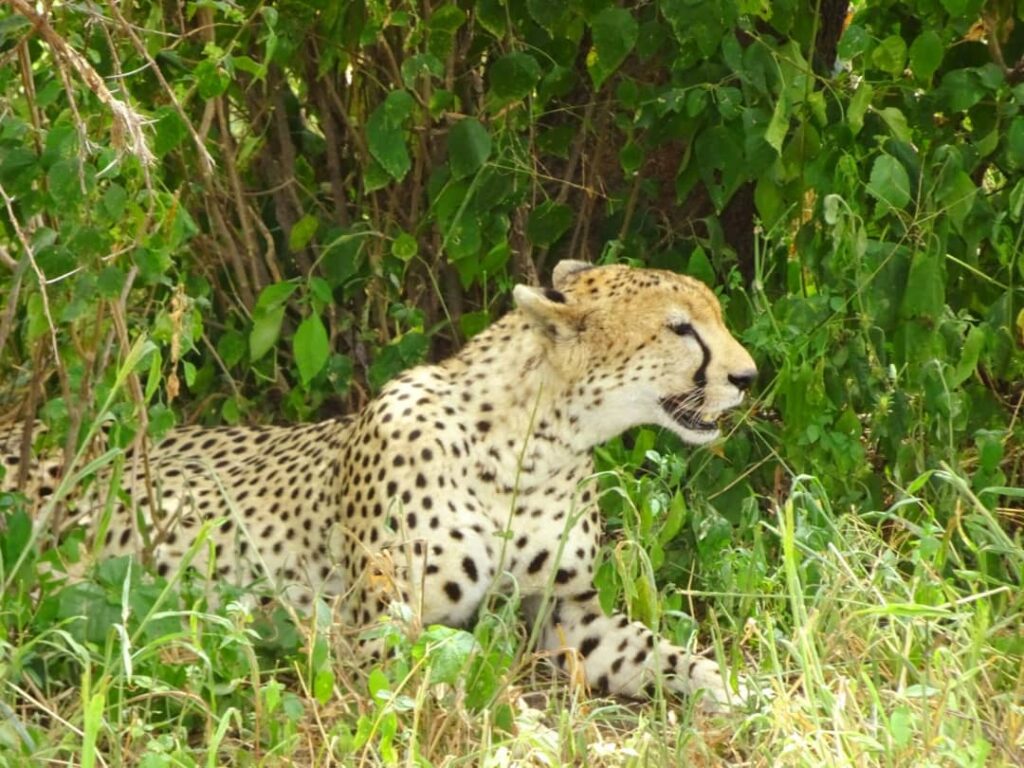
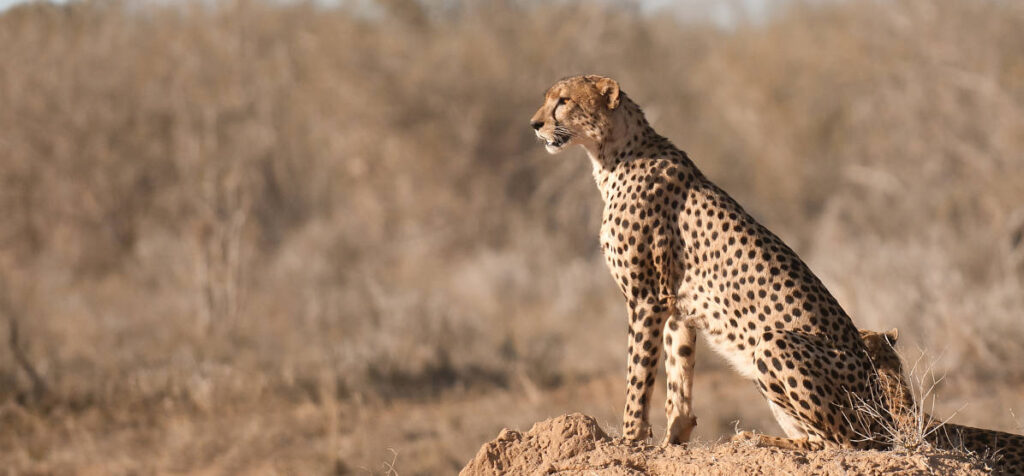
Whichever window you choose, the grass is shorter outside the wettest months, which makes spotting cheetah and the smaller predators considerably easier across the open plains.
Book early whichever window you choose. The Mara has a finite number of camps and the better ones fill twelve months ahead for the crossing season, while the conservancies deliberately cap guest numbers and so sell out even faster.
Month by month
Jan
28°
60 mm
Feb
29°
55 mm
Mar
28°
105 mm
Apr
26°
175 mm
May
25°
130 mm
Jun
25°
40 mm
Jul
25°
25 mm
Aug
26°
30 mm
Sep
27°
30 mm
Oct
27°
50 mm
Nov
26°
110 mm
Dec
27°
80 mm
The reserve is well managed and crime is rare, but wildlife rules are the usual ones: stay in the vehicle, keep distance from elephant and buffalo, and travel with a licensed guide.
During peak crossing season vehicle congestion at the river can become a hazard in itself, with jostling for position. Choosing a conservancy camp, or travelling outside July to October, avoids most of it. River banks are steep and crocodile numerous, so never approach on foot.
FAQ8 questions
What travellers ask most before booking a safari in Maasai Mara National Reserve, answered by local experts.
Read the full Maasai Mara National Reserve guideThe herds usually cross from the Serengeti into the Mara between July and October, though the timing shifts by several weeks each year with the rains and cannot be booked to a date. August and September are the most reliable months for Mara River crossings. Those crossings are unpredictable events: herds may gather on the bank for hours and then turn away without entering the water at all. Guides monitor herd movements daily, so ask at your camp each evening rather than relying on a plan fixed months ahead.
Conservancies cap vehicle numbers, permit night drives and walking safaris that the reserve prohibits, and channel revenue directly to Maasai landowning families. The reserve gives you the river crossings and generally lower rates. Many itineraries combine both, spending a few nights in a conservancy for exclusivity and quiet, then moving into the reserve during crossing season for the migration itself. Conservancy rates are usually higher but include activities that cost extra inside the reserve, so the gap narrows once you compare the full package rather than the nightly figure.
Very much so. The resident wildlife does not leave with the herds, and the Mara holds one of the highest lion densities in Africa along with excellent cheetah and leopard viewing year-round. January to March is warm, largely dry, far quieter and considerably cheaper, and cub sightings are common. Many repeat visitors deliberately avoid the peak months for exactly these reasons. The grass is also shorter outside the wettest months, which makes spotting cheetah and the smaller predators considerably easier.
Scheduled flights leave Wilson Airport several times daily for airstrips including Keekorok, Ol Kiombo, Musiara and Mara Serena, taking about forty-five minutes, and this is how most visitors travel. Driving covers roughly 270 kilometres in five to six hours, with the stretch beyond Narok rough enough to warrant a 4×4. Baggage on light aircraft is usually limited to fifteen kilogrammes in soft bags. Flying costs more but returns most of a day to the safari itself rather than to the road beyond Narok.
Three to four nights is the usual recommendation and gives a realistic chance of a river crossing during the migration months, since crossings cannot be scheduled. Outside the migration, three nights is ample for the resident big cats and general game. Many itineraries pair the Mara with Amboseli or Lake Nakuru, or cross the border to combine it with the Serengeti. Crossings cannot be scheduled, so allowing an extra night materially improves your chances during the migration months.
Yes, and the Mara is one of the classic places to do one. Flights launch before dawn, drift for about an hour over the plains and rivers, and finish with a champagne bush breakfast on landing. They are expensive and capacity is limited, so book well ahead during the migration months. The perspective on the herds from above is difficult to match from a vehicle. Flights launch before dawn and finish with a champagne bush breakfast on landing, and capacity is limited enough that peak-season slots go months ahead.
Not inside the national reserve, where walking is prohibited, but the surrounding Maasai conservancies permit both walking safaris and night game drives. Walks are led by an armed ranger alongside a Maasai guide, and the emphasis shifts to tracks, plants and the smaller detail of the ecosystem. If either activity matters to you, book accommodation on a conservancy rather than inside the reserve. If either activity matters to you, book accommodation on a conservancy rather than inside the reserve, because it cannot be arranged afterwards.
Cooler than most visitors expect, because the reserve sits between 1,500 and 2,100 metres. Days run 25°C to 29°C but nights fall to 11°C to 14°C, and early morning drives in an open vehicle are genuinely cold with wind chill. The long rains fall March to May and short rains through November, though brief afternoon storms are possible in any month. A windproof layer over a fleece makes the difference between enjoying a dawn drive and simply enduring it.
Everything we list for Maasai Mara National Reserve, in one place.
0 Tours
6 Tours
0 Tours
82 Tours
0 Tours
0 Tours
0 Tours
0 Tours